
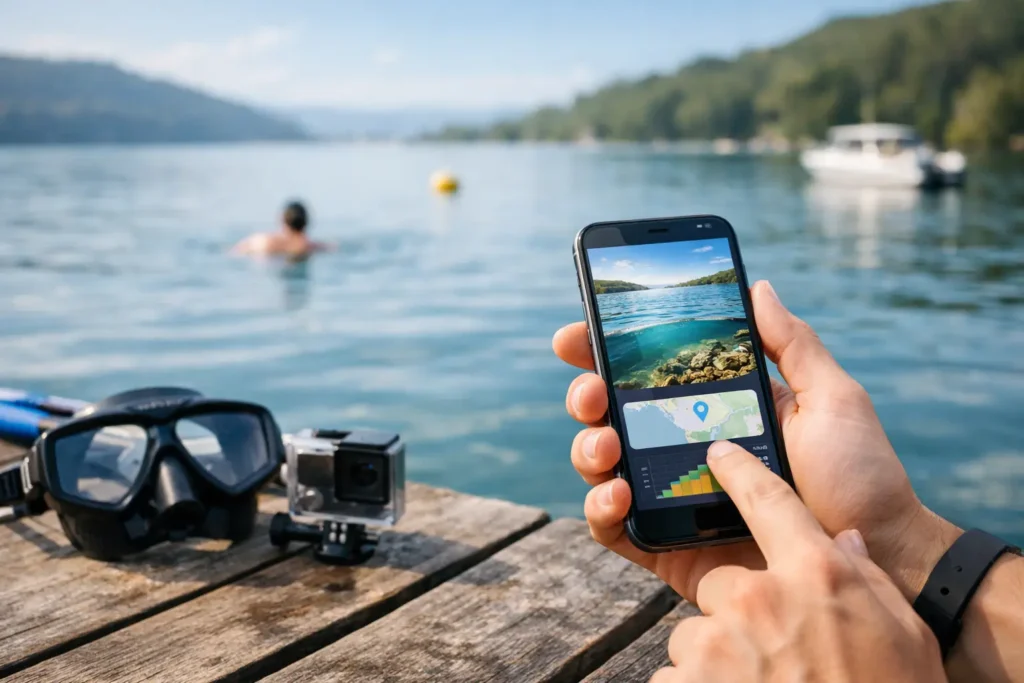
You can have your gear packed, your tank filled, your buddy texted, and your whole morning blocked off – then get to the coast and find green water, blown-out conditions, and a wasted trip. That is exactly why a water visibility app matters. For divers, snorkelers, and anyone who plans their day around getting in the water, the real question is not just what the weather is doing. It is whether you will actually be able to see once you get there.
Generic forecast tools rarely answer that well. They can show wind, swell, tide, and maybe a marine forecast, but they leave you to connect the dots. If you have enough local knowledge, you might make a decent call. If you do not, you are guessing with expensive gear, limited free time, and sometimes a long drive on the line.
Why a water visibility app beats a basic forecast
Ocean visibility is not one simple metric. It is the result of several moving parts that interact differently depending on the coast, the break, the reef, the tide stage, and recent weather. A small wind shift can change a spot fast. So can runoff, surge, swell angle, or yesterday’s chop hanging around longer than expected.
That is where a true water visibility app separates itself from a standard weather app. Instead of dumping raw data on the screen and making you interpret it, it should translate those conditions into a practical outlook. The goal is not to make users become marine forecasters. The goal is to help them answer one thing quickly: is it worth going, and when is the best window?
For ocean users, that translation layer is everything. It saves time, cuts down on bad calls, and builds confidence when conditions are borderline. You stop bouncing between five tabs, a couple social posts, and a text thread with friends who may or may not have checked the spot recently.
The real job of a water visibility app
A useful app should reduce friction before the session even starts. That means giving you a clean read on visibility potential, not just a pile of conditions that need decoding.
It should turn messy data into a simple call
Most people do not want to manually compare tide timing, nearshore wind, swell period, and clouded local reports before breakfast. They want a clear signal. Good, fair, or poor visibility. Better early, better late, or not worth the drive.
That does not mean oversimplifying the ocean. It means doing the hard work in the background so users can make faster decisions. AI analysis can help here, but only if it is tied to real coastal logic and not presented like magic. If the app cannot explain why visibility looks promising or why a window is closing, it becomes hard to trust.
It should help with timing, not just conditions
A lot of missed sessions happen because people think in full-day terms when the water only lines up for a short window. Maybe the morning tide is cleaner. Maybe the wind comes up by noon. Maybe surge settles just enough for a one-hour dive before things deteriorate.
A strong app should highlight those timing windows. That is much more useful than a flat daily forecast because it tells you when to move, not just what the ocean might look like in general.
It should reflect what is happening locally
No model sees everything. Local eyes still matter. Community check-ins, recent photos, and direct observations from people who were just there can make the difference between a smart call and a gamble.
That said, community reports alone are not enough either. They can be sparse, inconsistent, or overly subjective. One diver’s “pretty clear” can be another diver’s “not worth suiting up.” The best approach combines user observations with data analysis so you get both the human read and the broader pattern behind it.
What to look for before you trust an app
Not every tool that mentions marine conditions is built for visibility planning. If your priority is underwater clarity, there are a few features that matter more than flashy design or endless charts.
First, the app should be visibility-centered, not weather-centered. That sounds obvious, but many platforms still treat visibility as a side note. If you have to infer clarity from a dozen separate indicators, the product is not really solving the problem.
Second, it should be fast to read. Ocean planning usually happens in the gap between work, travel, and gear prep. You should be able to open the app and get the signal in seconds, then dig deeper only if you want to.
Third, it should account for trade-offs. A spot can have decent visibility but poor entry conditions. Another might look slightly murkier but still be the safer or more realistic option for the day. Good tools do not pretend every session is a clean yes or no. They help users weigh the full picture.
Fourth, it should support safer planning. That can mean buddy coordination, visibility-aware timing, and enough situational context to avoid solo decisions based on guesswork. For freedivers and scuba divers especially, bad visibility is not just disappointing. It can change safety, navigation, communication, and comfort in the water.
Why this matters more than people think
Bad visibility costs more than a frustrating morning. It can mean fuel, parking, charter time, lost practice, and missed travel windows. If you only get one day off, one tank dive, or one family beach morning to make it happen, a wrong call has real weight.
Travelers feel this even more. Locals can sometimes pivot to a backup spot or wait for a better tide. Visitors often do not have that luxury. They need faster confidence and less trial and error. A water visibility app becomes especially valuable when you are unfamiliar with the area and trying to avoid learning the hard way.
There is also the safety side. Low visibility can increase stress, make buddy contact harder, and reduce orientation for less experienced ocean users. Conditions that are manageable in clear water can feel very different when the water goes dark and murky. That does not mean poor visibility always equals unsafe. It does mean your planning tool should treat clarity as a practical session factor, not an afterthought.
Where the best apps are heading
The strongest products in this space are moving beyond raw forecasts and toward decision support. That is a big difference. Forecasting tells you what the ocean may do. Decision support helps you decide whether to go.
That shift matters because ocean users do not need more noise. They need fewer bad calls. They need a tool that combines environmental signals, local observations, and timing guidance into one clean view.
This is also where community starts to matter in a better way. The smartest apps are not trying to replace local knowledge. They are making it easier to share, verify, and use. If one person reports improving clarity and the data trend supports it, confidence goes up. If the report clashes with what the conditions suggest, users know to be cautious.
A platform like Searu fits this direction well because it is built around actual water decisions, not generic marine browsing. That distinction matters when your goal is to get in at the right time instead of just stare at charts.
The bottom line for divers and snorkelers
If an app only tells you the weather, it is still leaving a lot of work on your shoulders. A real water visibility app should help you answer the question that actually drives the trip: will the water be clear enough, and when should you go?
That means practical visibility outlooks, useful timing windows, local check-ins, and enough context to make a better call without opening six other tools. It should save you from wasted drives, give you more confidence on marginal days, and make safer sessions easier to plan.
The ocean will always have variables. That is part of why people love it. But guessing should not be part of the routine. The better your read before you leave home, the better your odds of showing up when conditions line up.