
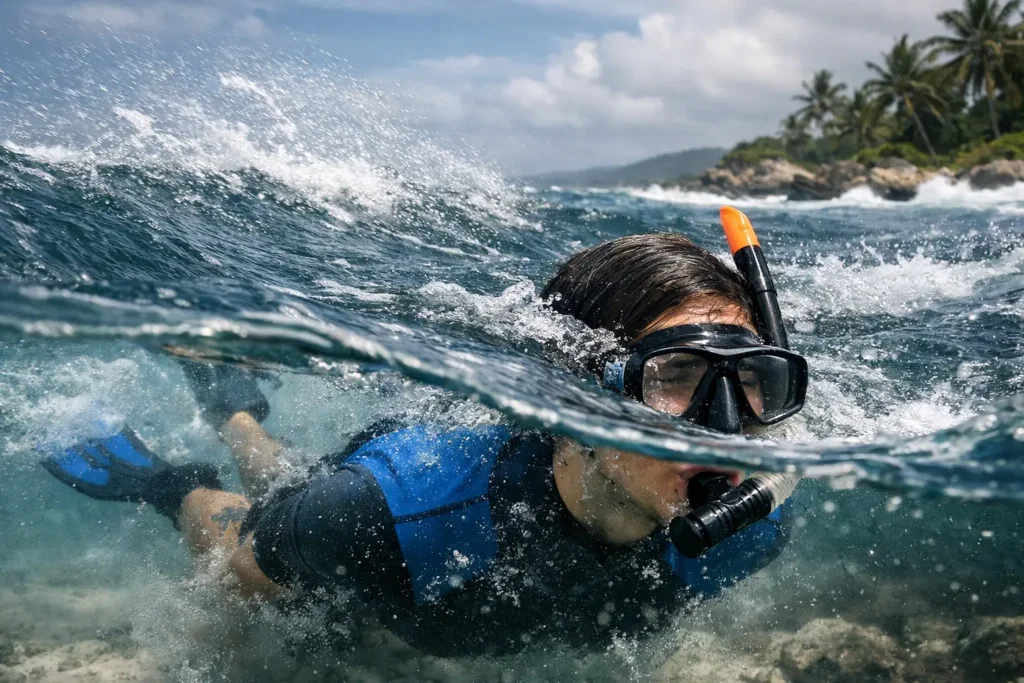
You can show up to a beach with clear skies, warm water, and all your gear ready – and still have a bad snorkel because of wind. So, can wind ruin snorkeling? Absolutely. But not always in the obvious way, and not always everywhere along the same stretch of coast.
That’s what catches people. A basic weather app might say the day looks fine, while the water tells a different story. For snorkelers, wind is less about whether the air feels nice and more about what it does to the surface, the shoreline, and underwater visibility once you actually get in.
Can wind ruin snorkeling by itself?
Yes, but usually through a chain reaction. Wind stirs up surface chop, pushes waves into certain shorelines, resuspends sand and silt, and can turn an easy entry into a sketchy one fast. Even when swell is small, a bad wind angle can make a protected-looking spot messy enough to kill the session.
The biggest issue for most snorkelers is visibility. If the bottom is sandy, shallow, or already a little unsettled, wind can churn the water just enough to turn a promising snorkel into a murky drift over gray-green nothing. You may still be safe in some cases, but the whole reason you geared up – to actually see fish, reef, structure, or bottom detail – gets wiped out.
Wind also changes effort. A place that feels calm from shore can become tiring once you’re swimming against a surface push or dealing with constant chop in your face. That matters even more for newer snorkelers, kids, and anyone swimming from an exposed beach entry.
What wind actually changes in the water
The fast answer is that wind affects three things that matter most: visibility, comfort, and safety.
Visibility usually drops when wind agitates the surface enough to mix sediment into the water column. That’s especially common near beaches with sand bottoms, river mouths, harbors, and shallow reef flats. If there was already some swell running, wind can make the turbidity worse by adding more movement on top of it.
Comfort drops when chop builds. Snorkeling in textured water is simply less fun. It’s harder to float relaxed, harder to look down steadily, and easier to swallow water while clearing a snorkel. Even a decent visibility day can feel annoying if the surface is constantly slapping at you.
Safety changes when wind affects entry and exit, current feel, and your ability to stay where you planned to snorkel. Onshore wind can push you around near rocks or make getting back to the beach more awkward than expected. Offshore wind can flatten a shoreline in some spots, but it can also help carry you away from your easy exit if you’re not paying attention.
Not all wind is bad for snorkeling
This is where local knowledge matters. Wind speed alone doesn’t tell the whole story. Direction, coastline shape, bottom type, and tide can completely change the outcome.
A moderate wind blowing offshore at a sheltered cove may leave the water surprisingly clean. That same wind speed blowing onshore into an open sandy beach can make the water look like soup. Similarly, a rocky coastline with deeper water close to shore may hold decent visibility longer than a shallow bay with a soft bottom.
There’s also timing. A beach can be rough and stirred up in the afternoon after hours of wind, then look much better the next morning if the wind drops and the water has time to settle. That’s why experienced water users stop looking for a single yes-or-no forecast and start looking for windows.
How much wind is too much?
There isn’t one universal cutoff, which is frustrating but real. For some protected spots, 10 to 15 mph might still be very manageable. For exposed beaches, even lighter wind can be enough to degrade visibility or make the surface unpleasant.
As a working rule, once wind gets into the moderate range and starts blowing into your shoreline, conditions can deteriorate fast for snorkeling. If you’re hoping for clear, relaxed viewing rather than just getting wet, your standards should be higher than they would be for surfing or a casual beach swim.
The better question is not just, “How windy is it?” but “Where is that wind going, and what kind of bottom is it hitting?” Sand plus shallow water plus onshore wind is a classic bad combo. Protected cove plus deeper water plus favorable wind angle can still produce a good session on a breezy day.
Signs wind has already ruined the session
Sometimes you can tell before you even put fins on. If the surface has tight, messy texture across the whole bay, if waves are breaking unevenly along a beach that’s usually mellow, or if the water color near shore has gone brown, tan, or dull green, visibility is probably taking a hit.
Watch what the shoreline is doing. If you see foam lines, suspended sand in the shorebreak, or constant surging around entry rocks, conditions are trending against you. The same goes for floating debris, seaweed being pushed around, or murky runoff collecting in corners of the beach.
Once you’re in, the red flags are just as clear. If you can’t comfortably keep your face in the water because of chop, if you lose sight of the bottom in shallow depth, or if you’re working harder than expected just to stay in position, wind is no longer a minor factor. It’s the session.
Can wind ruin snorkeling even when the forecast looks decent?
Yes, and this is one of the most common ways people waste a trip. A standard forecast might show light swell, decent temperature, and only moderate wind, but it doesn’t always tell you what that means for actual underwater clarity at a specific cove or beach.
That gap matters because snorkelers don’t just need surface conditions. They need translated conditions. They need to know whether that wind is likely to dirty the water, whether a protected side of the point will stay cleaner, and whether the best window is dawn instead of noon.
This is exactly why ocean planning gets easier when you use condition tools built around visibility rather than just weather. Searu, for example, is built for that decision layer – helping you figure out not just what the wind is doing, but whether the water is likely to be worth the drive.
When snorkeling is still worth it in windy conditions
A windy day is not an automatic cancel. If the spot is sheltered, the bottom is rocky instead of sandy, and the wind direction is working in your favor, you may still get solid water. Early sessions can also beat the buildup that often happens later in the day.
You can also salvage the outing by adjusting expectations. Maybe it’s not the day for a long exploratory snorkel over open reef. But it could still be good for a short protected swim, fish watching near structure, or staying close to a calm entry where visibility is holding.
The key is being honest about your goal. If you want crystal-clear viewing, wind matters a lot. If you just want a quick water session and you know the spot well, your threshold may be more flexible.
How to make the call before you leave
Start by checking wind direction, not just speed. Then match that to the specific shoreline you plan to enter. Ask whether the spot is exposed or protected, sandy or rocky, shallow or deep. A little local context goes much further than a generic beach forecast.
Next, pay attention to timing. Morning often wins because winds are lighter and the water has had more time to settle. If wind is forecast to build through the day, your window may be short.
Finally, look for real-world confirmation. Recent water reports, local photos, and community check-ins can tell you whether the forecast is matching reality. That’s often the difference between making a smart call and gambling on a maybe.
A better way to think about wind and snorkeling
Wind is not just a comfort factor. For snorkelers, it’s one of the fastest ways a decent-looking beach day turns into bad visibility, frustrating surface conditions, and a wasted trip. But it’s also not a blanket deal-breaker. The same wind that wrecks one spot can leave another one clean enough to be excellent.
That’s why the smartest move is to stop treating wind like a simple number. Look at where it’s blowing, what kind of coastline it’s hitting, and whether the water has a chance to stay clear. When those pieces line up, you get in. When they don’t, you save the drive, save the energy, and wait for the better window.