
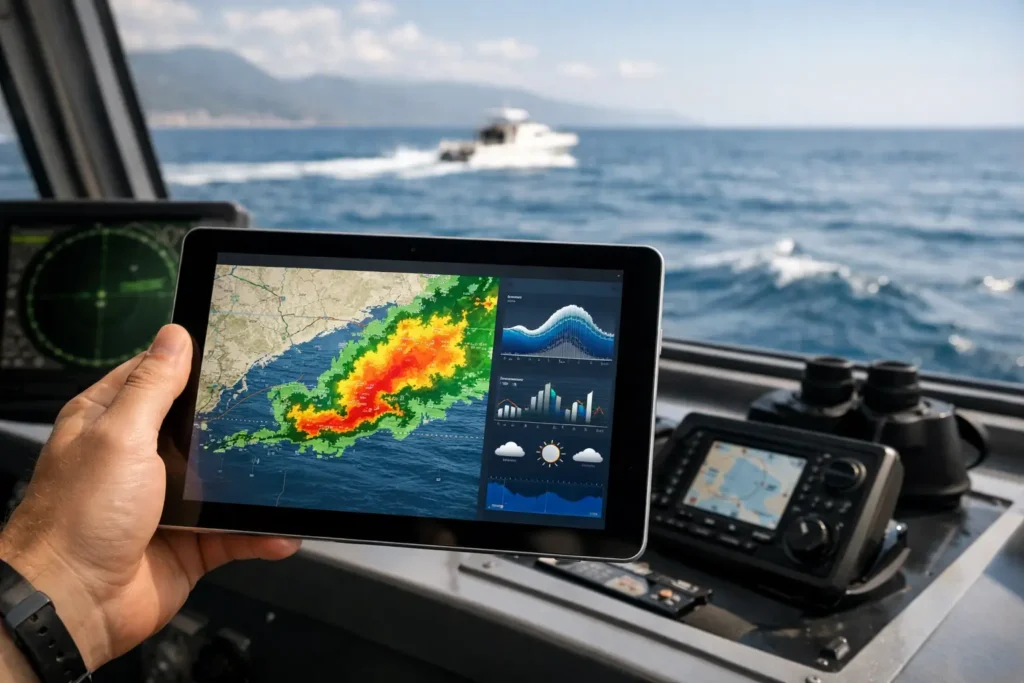
You do not need another forecast that says 2 to 3 foot swell, 8 knot wind, and a decent tide swing if you still end up standing at the shoreline staring into brown water. That is the gap an ai marine forecast app is supposed to close. For divers, snorkelers, spearfishers, and anyone planning around real water time, the question is rarely just what the weather is doing. The real question is whether the session is actually worth the drive, the prep, and the risk.
That difference matters more than most marine apps admit. Plenty of tools give you raw data. Fewer tell you what that data means for visibility, timing, and whether conditions are likely to improve or fall apart by the time you get there. If you spend enough time in the ocean, you already know that a technically accurate forecast can still be useless in practice.
Why a standard forecast usually falls short
Most marine forecasts are built for broad conditions, not go or no-go decisions. They are good at reporting wind speed, swell height, period, tides, and maybe current. That works if you already know the break, the cove, the river outflow, the prevailing wind direction, and how last night’s weather changed water clarity. It works less well if you are trying to answer a simple question fast: should I go now, wait until later, or skip it?
For underwater users, visibility is the missing layer. Two spots can show similar surface conditions and deliver completely different experiences below the surface. A small shift in tide timing, local runoff, wind angle, or leftover swell energy can turn a promising report into a wasted trip. That is why an app that only stacks charts and numbers still leaves too much guesswork on the user.
An ai marine forecast app should reduce that guesswork, not make you interpret five tabs and three models before breakfast.
What makes an ai marine forecast app useful
The best version of this kind of app does not just collect more information. It translates information into action. That sounds simple, but it is the whole job.
It should prioritize visibility, not just surface stats
If your day depends on seeing underwater, visibility should not be treated like a side note. It should be central. Wind and swell matter because they affect clarity. Tides matter because they affect current, sediment movement, and the timing of cleaner water. Recent rain matters because runoff can ruin an otherwise clean-looking morning.
A useful app connects those inputs and gives you a practical outlook. Not just “northwest wind at 9 knots,” but “visibility likely poor early, improving near slack tide” or “best chance for cleaner water is mid-morning before onshore wind builds.” That is the kind of translation people actually need.
It should show timing windows, not just daily averages
Daily forecasts flatten the part that matters most. Conditions often shift within a few hours. Early glass can disappear. A dropping tide can cloud a site. A protected cove can stay workable after nearby spots turn sloppy.
An ai marine forecast app should help users spot the best window, not just the general trend. That is especially valuable for people coordinating buddies, loading gear, or squeezing a session in before work. If the right call is “go at 7:30, not 10:30,” the app should be able to say that clearly.
It should blend prediction with what people are actually seeing
Ocean users trust data, but they also trust fresh local eyes. The smartest forecast tools combine both. AI can analyze tide, swell, wind, and weather patterns at scale. Community check-ins and photo reports can confirm whether that forecast is playing out in real life.
That combination matters because conditions can change quickly, and local variation is real. A model may say fair conditions coastwide while one entry point is churned up and another is clean. Real user observations help close that gap.
The trade-off with AI forecasts
AI can make marine planning faster and more useful, but it is not magic. That is worth saying plainly.
An app can identify patterns humans miss, especially across multiple data sources and repeat local outcomes. It can simplify complex inputs into a forecast that feels immediately usable. That is a real advantage when people are tired of bouncing between buoy readings, tide charts, beach cams, and scattered social posts.
But AI is still working with probabilities. Local bathymetry, surprise runoff, boat traffic, recent sand movement, and weird wind swings can all change the picture. So the best ai marine forecast app is not one that pretends to be perfect. It is one that communicates confidence honestly, updates often, and gives users enough context to make better judgment calls.
That is a big distinction. False certainty is dangerous on the coast. Clear probability is useful.
What ocean users should look for in an AI marine forecast app
If you are choosing between apps, look past flashy dashboards. The real test is whether the app helps you decide faster and with more confidence.
Clarity guidance should be front and center
For snorkelers, freedivers, scuba divers, and spearfishers, visibility is not a bonus metric. It changes everything from enjoyment to safety. If the app buries water clarity under generic marine weather, it is not really built for your session.
The app should simplify, not overload
More charts do not always mean better planning. A good tool can still show the underlying conditions, but it should lead with a clean answer. Is this spot likely worth it? When is the best window? What changed since yesterday? If you need ten minutes of interpretation every time you open it, the app is doing too much and helping too little.
Local context matters
National weather products are useful, but ocean sessions are local. Protected coves behave differently than open beaches. River mouths, harbor influence, reef structure, and tide exposure all shape actual conditions. A strong app accounts for that instead of treating every coastline segment the same.
Community features are not just social extras
This part gets overlooked. Real-time check-ins, local reports, and buddy coordination are practical tools, not fluff. They can save a trip, confirm a forecast, or help someone avoid soloing when conditions are borderline. For people who spend serious time in the water, that kind of built-in community makes planning easier and safer.
Why this matters beyond convenience
A better forecast is not just about saving gas or avoiding disappointment, although it does both. It also changes how people approach risk.
Bad planning creates pressure. You have already driven out, geared up, and carved out the time, so you are more likely to force a session even when conditions are off. That is how people end up swimming in poor visibility, entering at the wrong tide stage, or stretching solo because they do not want the effort to be wasted.
A strong ai marine forecast app lowers that pressure by helping you make the right call earlier. Go when it lines up. Wait when a better window is forming. Skip it when the odds are bad. That is not overthinking the ocean. That is respecting it.
This is where a platform like Searu makes sense for the right user. It is built around the actual planning problem – not just what conditions are, but whether they add up to a good ocean session, especially when visibility is the thing you care about most.
The future of the ai marine forecast app
The category is moving toward decision support, not just information delivery. That is a good shift. Ocean users do not need more raw feeds pasted into one screen. They need tools that turn fragmented conditions into a clear next move.
The best apps will keep getting better at combining modeled forecasts, historical local behavior, and fresh user observations. They will probably get more personalized too. A beginner snorkeler, a shore diver, and an experienced spearo do not all need the same threshold for a good day. What counts as workable depends on skill, goals, entry style, and risk tolerance.
That also means no single forecast should be treated as universal truth. The smartest app for one user is the one that helps them make better decisions for their style of ocean time.
If you are evaluating any ai marine forecast app, ask one simple question: does it help you stop guessing? If the answer is yes, it is doing something valuable. If it still leaves you stitching together tides, swell, wind, and rumor on your own, it is just another forecast wearing a smarter label.
The ocean will always have a say, and that is part of the draw. But better tools can stack the odds in your favor, help you pick your window, and make the call before the shoreline makes it for you.