
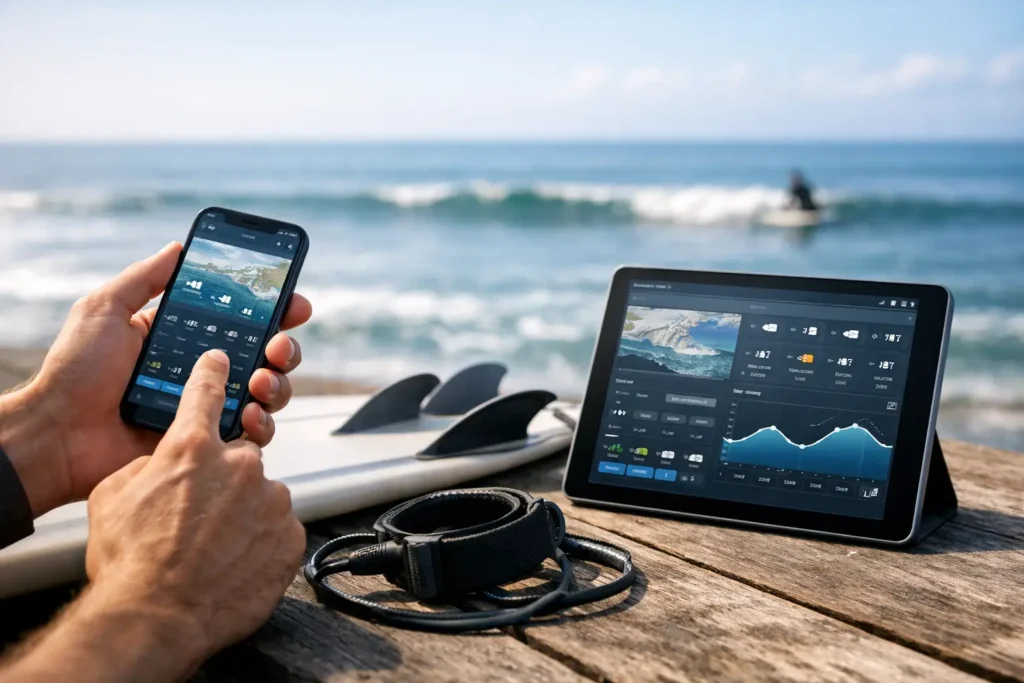
You load the car, pack the fins, burn the gas, and get to the coast only to find green water, blown-out surface chop, and zero reason to suit up. That is exactly why an ocean session planning app matters. For divers, snorkelers, freedivers, and anyone who plans around water clarity, the real problem is not a lack of data. It is having too much of the wrong kind, scattered across forecasts, cams, tide charts, and group chats that still leave you guessing.
Generic weather tools can tell you wind speed, swell direction, and air temperature. They usually cannot tell you the part you actually care about when you are deciding whether to go – will the water be clear enough, calm enough, and worth the effort at the time you can actually get there? That gap is where a specialized planning app becomes useful.
What an ocean session planning app should actually do
A good ocean session planning app does not just collect marine data and throw charts at you. It should translate conditions into a decision you can use. That means taking inputs like wind, tide movement, swell energy, recent weather, and local observations, then turning them into a simple outlook for visibility and timing.
That sounds obvious, but it is surprisingly rare. Most ocean users still bounce between multiple sources, mentally weigh a few variables, and hope their local read is still right by the time they arrive. If you have enough experience, that process can work. It can also fail fast when one variable changes the whole picture.
For underwater sessions, visibility is the swing factor. You can tolerate some wind. You can work around moderate swell in certain spots. But if the water is dirty, the session changes completely. Snorkelers lose the whole point of getting in. Freedivers lose confidence and line of sight. Scuba divers may still enter, but the value of the dive can drop hard. Spearfishers and underwater photographers know this better than anyone.
So the app needs to answer a practical question, not an academic one: is this likely to be worth it, and when?
Why standard forecast apps fall short
Most forecast apps are built for broad weather awareness, not nearshore decision-making. They are useful for checking the basics, but they leave too much interpretation on the user.
Take a common scenario. A forecast shows manageable wind and a modest swell. That can look fine on paper. But if there was heavy runoff two days ago, a tide swing that stirs up sediment, or a local beach that turns murky under a specific wind angle, the forecast alone will miss what matters most. You show up expecting decent conditions and get soup.
That is the difference between surface conditions and session conditions. Surface conditions tell part of the story. Session conditions tell you whether the water will actually deliver what you need.
This is where specialized tools earn their place. An app built around ocean sessions should reduce interpretation, not increase it. It should save time, trim the number of tabs you check, and give you enough confidence to either commit or pass.
The real value is better timing, not just more information
Ocean users do not need more noise. They need better timing.
A strong planning app should help you spot the window, not just the day. That matters because coastal conditions can improve or fall apart within hours. A spot that is cloudy at sunrise may clean up late morning on a favorable tide. Another may look decent early, then get churned up as wind builds.
If your only answer is a broad daily forecast, you still have to guess. If you get a suggested time window tied to expected clarity and conditions, your decision gets easier. You can leave later, move faster, or skip the session before it wastes half your day.
That convenience is not small. For people coordinating buddies, loading tanks, arranging childcare, driving long distances, or squeezing a water session around work, timing is everything. Better timing means fewer blown missions and more sessions that actually deliver.
What features matter most in an ocean session planning app
Not every feature deserves equal weight. For this category, a few functions make the biggest difference.
Water clarity outlooks
This is the anchor feature. If the app cannot give you a usable read on likely visibility, it is not solving the core problem. The best version is not a raw number with no context. It is a clear outlook that helps users understand whether conditions are poor, fair, good, or worth jumping on.
Suggested session windows
This is where planning becomes actionable. A decent app should tell you more than whether tomorrow looks promising. It should point to the stretch of time most likely to line up.
That matters for local users and travelers alike. Locals can fit sessions into the right window. Visitors can avoid wasting a whole vacation morning on a bad call.
Community check-ins and local photos
Models help, but real-world confirmation matters. A fresh local report or photo can validate the outlook or reveal that a spot is behaving differently than expected.
The trade-off is quality control. Community input is powerful when it is recent, location-specific, and easy to interpret. It becomes less useful when reports are vague, outdated, or inconsistent. The best apps make these reports simple enough to contribute and structured enough to trust.
A built-in buddy system
This is one of the most practical additions for ocean users, especially freedivers and solo-prone coastal regulars. Good conditions do not always line up with your friends’ schedules. A built-in way to find a partner adds both convenience and a real layer of safety.
Not every user needs this feature every time, but when they do, it matters a lot.
The smartest apps combine data with local reality
Pure forecasting has limits. Pure crowdsourcing has limits too. The strongest ocean session planning app sits in the middle.
It should use environmental data to generate a forward-looking read, then sharpen that read with local observations from people who were actually there. That combination is more useful than either source by itself.
Data can catch patterns that humans miss, especially across wind, swell, and tide interactions over time. Community reports can catch fast-changing conditions, local quirks, and spot-specific exceptions. Put them together well, and you get something ocean users actually trust.
That balance also helps newer users. Experienced divers often build their own mental models after years of checking conditions. Beginners and occasional users usually do not have that pattern library yet. A smart app shortens the learning curve without pretending the ocean is fully predictable.
Who gets the most value from an ocean session planning app
If you care about visibility, you are already in the target zone.
Snorkelers benefit because clear water is the session. Freedivers benefit because confidence, safety, and line of sight all change with visibility. Scuba divers benefit because a dive with poor clarity can turn into a lot of prep for very little reward. Spearfishers, photographers, and nearshore explorers all feel the same pain when conditions do not line up.
Travelers may gain even more than locals. A local can shrug off a missed morning and try again tomorrow. A traveler has fewer shots, less local knowledge, and more to lose on a bad call. An app that cuts down uncertainty can save a trip from becoming a string of expensive guesses.
Stop guessing and start making cleaner calls
The point of an ocean session planning app is not to replace judgment. It is to make judgment faster and better.
You still have to respect local conditions, your own skill level, and the fact that ocean forecasts always carry uncertainty. But there is a big difference between making a call with relevant session-focused guidance and making one from a pile of disconnected weather tabs.
That is why tools like Searu stand out. They are built around the way ocean users actually decide – not just what the weather is doing, but whether the session is likely to be clear, worthwhile, and safer to time right.
When an app can translate messy coastal variables into a simple go, wait, or skip decision, it does more than save time. It protects your energy for the sessions that count. And when the right window opens, you are ready to get in instead of still trying to figure it out.