
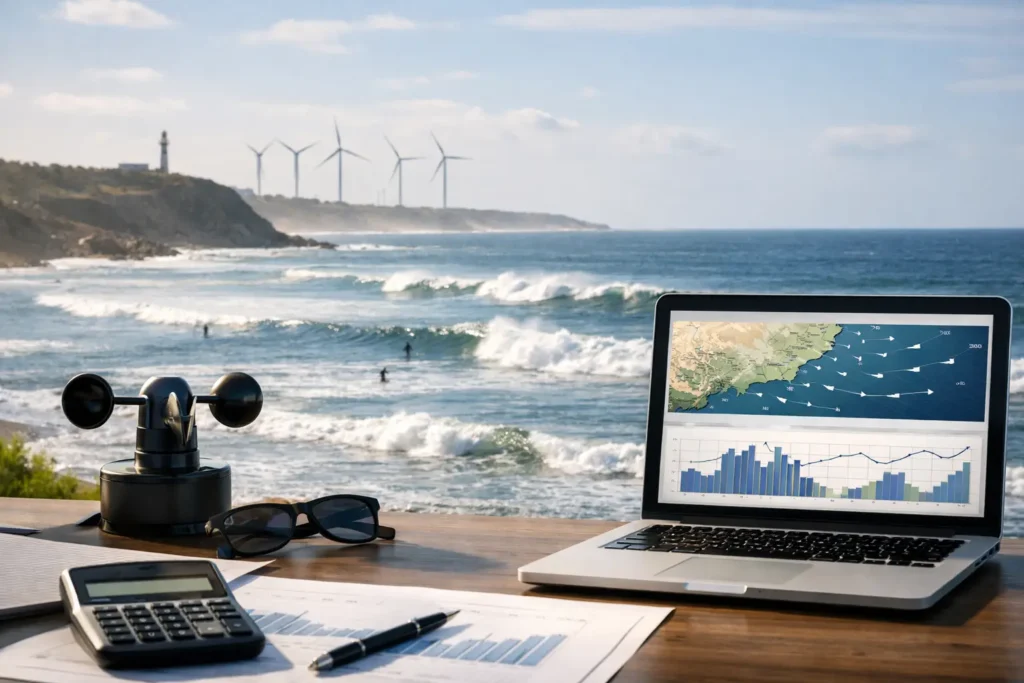
You can have glassy skies, a clean gear bag, and a free morning, then still arrive to pea soup water. That is exactly why a wind swell visibility calculator matters. For divers, snorkelers, and freedivers, the question is not just whether the ocean is calm enough to enter. It is whether the water will actually be worth getting into.
Most marine forecasts do not answer that. They show wind speed, swell height, period, and tide, but they leave you to translate all of that into one real-world decision: Will I be able to see anything down there? A wind swell visibility calculator closes that gap by converting surface and subsurface factors into something practical – a better read on likely water clarity and the best time window to go.
What a wind swell visibility calculator actually does
At its core, a wind swell visibility calculator estimates how likely it is that underwater visibility will improve or fall off based on a mix of ocean conditions. It is not trying to predict the future with perfect precision. It is trying to reduce bad guesses.
That distinction matters. Visibility is affected by more than one variable, and the same conditions can produce different results at two nearby spots. One cove stays clear in moderate wind because it is protected. Another turns brown after a small swell because the bottom is silty and the shoreline is exposed. A useful calculator accounts for this by weighing multiple inputs together instead of treating any single number like the whole story.
For ocean users, the value is simple. You spend less time bouncing between weather apps, buoy data, tide charts, webcams, and local rumors. You get a clearer call on whether conditions are lining up, staying marginal, or likely to deteriorate before you finish the drive.
Why wind and swell matter most for visibility
If you have ever shown up after a windy night and found churned-up water, you already understand the basic relationship. Wind creates surface agitation, and that agitation can stir sediment, especially in shallow nearshore areas. Even when the surf looks manageable from shore, the water below can be loaded with suspended particles.
Swell adds another layer. Long-period swell can move a lot of water and push energy deeper onto reefs, sandbars, and rocky bottoms. Shorter, messier swell can create constant turbulence in the shallows. Neither automatically means terrible visibility, but both can reduce clarity fast when they interact with the wrong bottom type or tide stage.
Direction is just as important as size. A three-foot swell from a sheltered angle may have little effect at your usual entry point. A similar swell from a direct exposure can turn the same spot cloudy by sunrise. Wind works the same way. Offshore wind may groom surface conditions at one location while an onshore breeze trashes another.
This is where a calculator becomes more useful than a raw forecast. It helps interpret not just how much wind or swell is present, but how those conditions are likely to affect the water where you actually plan to get in.
The inputs that make a calculator useful
A solid wind swell visibility calculator pulls from several condition buckets at once. Wind speed and direction are obvious starting points. Swell height, direction, and period usually come next, because wave energy and angle can drastically change how much the bottom gets disturbed.
Then there is tide. Incoming water can improve visibility at some spots by bringing in cleaner water. At other locations, a rising tide pushes surge into reef structure and makes things worse. Outgoing tide can either flush sediment away or carry runoff and debris into the entry zone. There is no universal rule, which is why local pattern recognition matters.
Recent conditions matter too. If a beach had two days of hard onshore wind and heavy swell, clarity may stay poor even after the forecast starts looking better. Water often needs recovery time. The same goes for rain, runoff, and river discharge, especially near harbors, inlets, and urban watersheds.
Bottom composition is a big hidden factor. Sand, silt, rock, coral, and eelgrass all react differently under wave energy. A calculator that does not account for local seafloor behavior can still be helpful, but it will always be a rough estimate. The better tools learn how specific spots respond over time.
Why raw forecast numbers are not enough
Forecast data is useful, but most ocean users do not need more numbers. They need fewer wrong trips.
The problem with standard weather and surf products is that they report conditions, not outcomes. They tell you the wind will be 12 knots from the northwest and the swell will be 4 feet at 11 seconds. That is fine if you already know exactly how your cove reacts to those inputs. But if you are checking a new spot, traveling, or trying to compare several possible entries, those numbers still leave a lot of interpretation on you.
A visibility-focused calculator changes the job from decoding data to making a decision. Instead of asking, What does 4 feet at 11 seconds mean for this kelp bed, you are asking, Is this likely to be a green light, a maybe, or a skip it? That is a much better way to plan around limited time, fuel, and daylight.
Where a wind swell visibility calculator can get it wrong
No honest tool should pretend visibility can be predicted perfectly. Ocean conditions are messy. Microclimates, local runoff, recent boat traffic, shoreline construction, and spot-specific seabed quirks can throw off even a smart model.
There is also a difference between broad regional guidance and hyperlocal clarity. One coastline may look favorable overall while a single protected pocket stays clear or a single exposed pocket stays dirty. If a calculator uses only regional data, it may miss those local exceptions.
That is why the best approach blends model output with recent observations. User check-ins, local photos, and actual in-water reports can validate or correct the forecast. AI can recognize patterns across wind, swell, and tide data, but people in the water still provide the ground truth.
For that reason, a wind swell visibility calculator works best as a decision support tool, not a guarantee. It should sharpen your read, not replace your judgment.
What to look for in a better wind swell visibility calculator
If you are choosing a tool for session planning, the most useful calculators do three things well. First, they simplify. You should not need five tabs open to understand whether visibility is likely improving or fading.
Second, they account for timing, not just conditions. A whole day can look mediocre on paper, yet offer a two-hour clean-water window around a tide shift or easing wind. That timing layer is what separates practical guidance from generic reporting.
Third, they combine forecast logic with real observations. That combination is what makes a tool feel trustworthy when conditions are borderline. A data model can tell you what should happen. Community input tells you what is happening.
This is also where a platform like Searu fits naturally. The real value is not just tracking ocean variables. It is translating them into a visibility outlook, then backing that up with local reports and useful timing windows so you can stop guessing and get in when conditions line up.
How to use a calculator without overthinking it
The smartest way to use a wind swell visibility calculator is to treat it as a fast filter. Start with the visibility outlook. If it looks poor, save yourself the drive unless you have a strong local reason to think your spot will behave differently.
If it looks promising, check the timing. Conditions that are decent at sunrise may fall apart by late morning when wind builds. Other days improve after the tide turns. A good calculator helps you target that window instead of burning the whole day on trial and error.
Then sanity-check with local context. Think about exposure, bottom type, and any recent weather that may still be affecting the water. If the tool also includes current check-ins or fresh photos, even better. That added layer can be the difference between a solid call and a wasted setup.
For newer ocean users, this approach speeds up the learning curve. For experienced locals, it saves time and confirms instincts. Either way, the goal is the same: less guesswork, better sessions, and fewer moments standing onshore wondering why the forecast looked fine but the water does not.
A good ocean day usually comes down to timing, not luck. When a tool can connect wind, swell, and local behavior into a visibility read you can actually use, you spend less time decoding conditions and more time choosing the right moment to get wet.