
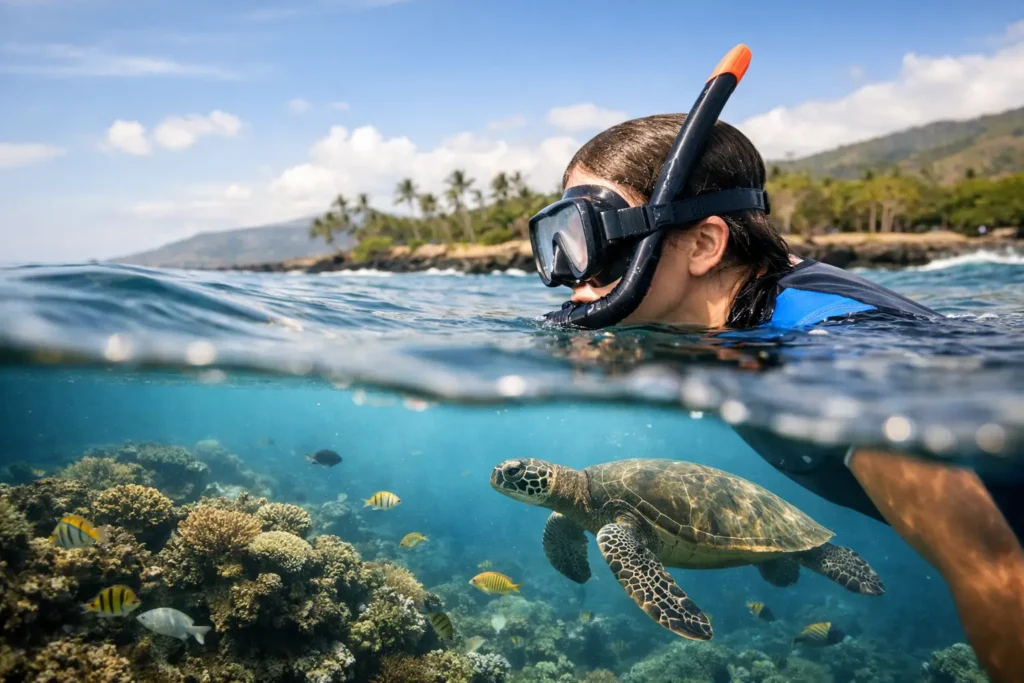
You can have sunny skies, warm water, and a beach full of people and still get a bad answer to the question, is snorkeling safe today? Surface weather can look friendly while the water is choppy, visibility is blown out, or currents are doing something sketchy just outside the cove.
That gap between how it looks from the parking lot and how it actually feels in the water is where most bad calls happen. If you snorkel regularly, you already know the goal is not just getting in. It’s getting in when conditions line up well enough to make the session worth it and safe enough to enjoy.
What “is snorkeling safe today” really means
For snorkelers, safety is never one single number. It’s a stack of conditions working together, and one weak piece can change the whole call. Calm wind helps, but not if the swell is wrapping into your entry. Clear water is great, but not if the outgoing tide is pulling hard through a channel. A protected bay can feel mellow, then turn into a headache when boat traffic picks up or the sun angle drops and you lose your landmarks.
So when you ask, is snorkeling safe today, what you’re really asking is whether today’s conditions match your skill level, your location, your entry and exit plan, and the amount of margin you want if something changes. That answer is different for a first-timer in rental gear than it is for a local who knows the reef, the tide swing, and the usual afternoon wind shift.
Start with the conditions that matter most
The fastest way to make a smart call is to stop treating snorkeling like a beach day and start treating it like a water session. The best sessions usually come when a few core variables line up at the same time.
Visibility is not a luxury
If you can’t see well, everything gets harder. It’s tougher to spot reef structure, find your line back to shore, keep track of your buddy, and notice surge or current patterns before they move you. Murky water doesn’t automatically make snorkeling unsafe, but it cuts your margin fast.
Visibility is also one of the most misunderstood parts of planning. A general weather app won’t tell you much about what the water actually looks like below the surface. Wind direction, recent swell, runoff, tide movement, and local bottom type all affect clarity. One beach can be green and churned up while another spot ten minutes away is clean.
Wind changes more than comfort
Light wind can mean an easy float. Strong onshore wind can mean surface chop, drift, and a rougher swim back than expected. Offshore wind can flatten the surface at one spot while making another entry awkward or pushing less experienced swimmers farther than they want to go.
For snorkelers, wind matters because it affects both comfort and control. If you’re fighting surface texture the whole time, you burn more energy, breathe harder, and get less relaxed in the water. That may sound minor until you’re far enough from your exit point to feel it.
Swell and surge decide whether the water is manageable
A spot can look swimmable and still be a poor snorkeling call if the swell period and direction are sending energy into the reef. That creates surge, moving water, and awkward timing around rocks or shallow structure. Even a modest swell can get amplified in certain coves, channels, and reef shelves.
This is where local knowledge matters. The same forecast can produce very different outcomes depending on orientation and bottom shape. A protected inside reef may stay manageable while an exposed point nearby gets hammered.
Current is the quiet deal-breaker
Current is one of the biggest reasons a session goes from fun to stressful. You may not notice it right away if you enter with it, especially in calm-looking water. Then you turn back and realize the return swim is work.
Tide exchanges, wind-driven drift, reef channels, and point geography can all create current. If you’re asking is snorkeling safe today, and you don’t have a read on current, you’re still guessing.
The beach check matters too
Forecasts are useful, but the shoreline gives you the final vote. Before you gear up, watch the water for a few minutes. You’re looking for patterns, not just a quick glance.
See where waves are breaking and where they aren’t. Look for foam lines moving sideways, which can hint at current. Watch whether snorkelers already in the water are holding position easily or getting pushed around. Notice if the entry is simple at one moment and chaotic a minute later. Ocean conditions often reveal themselves in cycles.
If the water color shifts from clear to brown near shore, if you see constant chop on the surface, or if everyone entering is getting bounced around at the same spot, take that seriously. A good session usually looks good before you even put your mask on.
Your skill level changes the answer
There is no universal safe. There’s safe for you, today, at that spot.
A calm protected cove with easy exits and decent visibility might be a green light for a beginner. That same beginner should probably skip an exposed reef with surge, low visibility, and a long surface swim, even if more experienced water users are out there.
Be honest about three things: how comfortable you are in chop, how well you handle a tired swim back, and whether you can solve a small problem without panicking. Fins slipping off, mask flooding, disorientation in murkier water, and awkward entries are all manageable until they stack up.
One of the smartest habits in ocean sports is downgrading the plan before the ocean does it for you. Choose the easier entry. Stay closer in. Shorten the route. Save the edge-case session for another day.
Why a buddy changes the whole equation
If you’re snorkeling alone, the threshold for “safe enough” should be much higher. That doesn’t mean solo sessions never happen. It means you need more margin, better local familiarity, and a cleaner set of conditions.
A buddy is not just company. A buddy gives you another set of eyes on current, visibility, fatigue, and decision-making. They also make pre-session checks more honest. It’s easier to call off a bad idea before getting in when someone else is part of the conversation.
That’s one reason tools built around planning and buddy coordination are actually useful, not just convenient. Searu, for example, is designed around the real question ocean users ask before leaving home: not just what the weather says, but whether the session is actually worth doing.
How to answer “is snorkeling safe today” before you drive
The best pre-check is simple and fast. You want a read on visibility, wind, swell, tide timing, and local observations, all in one pass. If those signals are mixed, your answer is mixed too.
Good signs usually look like this: lighter wind, manageable swell for the spot, a tide window that doesn’t create a nasty exchange, recent check-ins showing decent clarity, and a protected entry with an easy exit. Red flags are the opposite: strong onshore wind, murky reports, rising swell into an exposed area, heavy surge near rocks, or no reliable read on what the water actually looks like right now.
If you have to talk yourself into it with phrases like “it’ll probably be fine,” you already have your answer.
When the answer is yes, still keep some margin
Even on a good day, small mistakes can make a session harder than it needs to be. Tell someone where you’re going. Bring fins that fit. Don’t push your range early in the swim. Check the exit before you get too far from it. Keep your head up now and then instead of staring down the entire time.
The goal is not to eliminate risk. That’s not realistic in the ocean. The goal is to reduce avoidable risk and choose sessions where the trade-off is worth it.
So, is snorkeling safe today?
Sometimes yes. Sometimes absolutely not. Most often, it depends on whether the water is clear enough, calm enough, and predictable enough for your experience level and your plan.
The best snorkelers are not the ones who force every session. They’re the ones who stop guessing, read the conditions well, and wait for the window that makes sense. The ocean will still be there tomorrow, and sometimes that’s the smartest call you can make.