
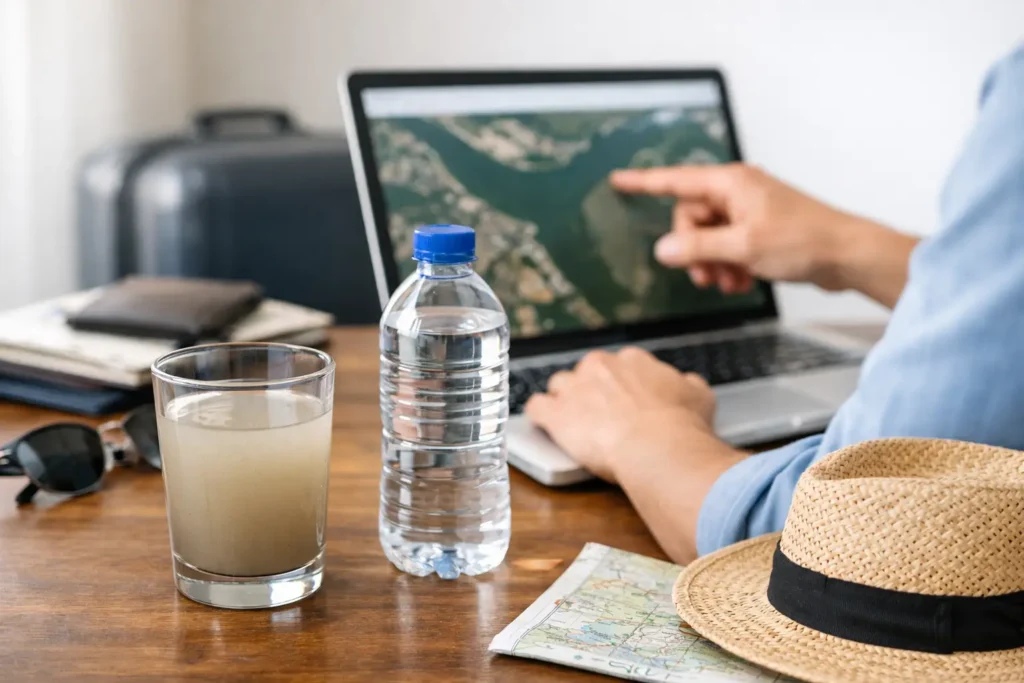
You loaded the car, packed the fins, burned the gas, and got to the beach only to find green-brown soup. If you want to know how to avoid murky water, the answer is not luck. It is reading the right signals before you leave, knowing which ones matter most for your spot, and timing your session instead of forcing one.
Murky water is rarely random. Most bad-visibility days are the result of a few repeat drivers – swell energy, wind, tide movement, runoff, and bottom type. The trick is not memorizing every ocean variable like a marine scientist. The trick is turning those variables into a simple call: go now, wait a few hours, or skip it.
Why murky water happens in the first place
Visibility drops when the water column gets filled with suspended stuff. That can mean sand churned off the bottom, sediment pushed out of a river mouth, plankton blooms, organic debris, or just general turbulence that keeps particles from settling. What matters to you as a diver or snorkeler is that different coastlines get murky for different reasons.
On sandy beaches, a moderate swell can be enough to stir up the bottom and kill visibility fast. On rocky reefs, the same swell might still be manageable if wind stays light and the area has some protection. Near harbors, river mouths, or storm drains, even a clean-looking morning can turn fast after rain or strong tidal exchange pulls dirty water through.
That is why generic weather checks fail so often. Blue skies do not equal clear water. Light surf at one beach does not mean the cove around the corner is also good. If you are serious about getting in when conditions line up, you need to think below the surface.
How to avoid murky water by reading the big three
If you only check three things before a session, make them swell, wind, and recent rainfall. Those three usually explain most visibility swings.
Swell tells you how much the bottom gets worked
Big swell does not just affect wave shape. It moves water all the way to the seafloor, especially in shallower nearshore zones. If your spot has sand, that means suspended sediment. A long-period swell can be even more disruptive than a shorter local wind swell because the energy reaches deeper and keeps stirring things up.
But this is where local nuance matters. Some sites can handle a little swell from one direction and turn instantly dirty from another. A south-facing cove may stay relatively clean on small west energy and get trashed on direct south swell. Over time, good water users build a mental map of which direction ruins which spot.
Wind often decides whether things clean up or stay messy
Even after swell drops, strong onshore wind can keep the surface chopped and the water column mixed. That makes it harder for sediment to settle and often creates that washed-out, low-contrast look underwater. Offshore or light morning wind usually gives you a better shot at cleaner water, especially if the ocean had time to settle overnight.
This is why early windows are often better. It is not magic. It is just less wind, less surface turbulence, and a calmer chance for visibility to improve before the afternoon gets sloppy.
Rain changes everything near runoff zones
If there has been recent rain, be careful around river mouths, creek outlets, harbors, canals, and urban drainage points. Runoff can dump sediment, pollutants, and organic material into the water long after the rain stops. The ocean may look decent from shore but still hold dirty layers or streaks moving through the zone.
There is no universal wait time after rain. It depends on how much fell, how your local watershed drains, and how open or enclosed the coastline is. Some places rebound in a day. Others stay murky much longer. If your spot is runoff-sensitive, rainfall deserves more weight than the surf report.
The smaller signals that make a big difference
Once you get the big three down, your decisions get sharper when you add tides, bottom type, and local geography.
Tide can help or hurt depending on the site. Incoming tide sometimes brings in cleaner ocean water, especially in areas affected by estuary outflow or shallow stirred-up inside water. In other places, strong tidal movement can increase turbidity, especially in channels or narrow entries. Slack tide may improve comfort and visibility in one location and do nothing in another. This is a classic it-depends variable.
Bottom type matters because sand moves and reef usually does not. If your entry is over sand and your actual dive zone is reef, the conditions may be bad at the shoreline but better outside. Or the opposite can happen if surge is rolling across a shallow reef shelf and keeping everything cloudy. Understanding where the sediment is coming from is often more useful than asking whether the whole coastline is clear.
Geography is the cheat code. Headlands, coves, jetties, and islands can block wind and swell enough to create clean pockets when exposed spots are blown out. The coast is rarely uniformly good or bad. People who consistently score visibility know where the backup zones are.
How to avoid murky water without wasting hours researching
The old way is piecing together swell charts, wind forecasts, tide tables, rain totals, webcam guesses, and group chats. It works, but it is slow and easy to get wrong. You can spend 20 minutes checking data and still miss the one factor that matters most for clarity at your spot.
A better approach is to use a system that translates those conditions into visibility timing. That is the real problem most weather tools do not solve. Surface conditions are helpful, but they do not answer the question you actually care about: will I be able to see underwater when I get there?
That is where purpose-built planning becomes useful. Tools like Searu are designed around water clarity and session timing, not just raw marine data. Instead of making you interpret every variable yourself, the goal is to give you a practical outlook, likely windows, and real-world check-ins from people who were there recently. That saves time, but more importantly, it cuts down on bad calls.
Build your own visibility playbook
Even with better forecasting, your own log matters. Every serious ocean user should keep simple notes after sessions. Not a giant spreadsheet. Just enough to spot patterns.
Write down the location, visibility estimate, swell size and direction, wind, tide stage, and whether there had been recent rain. Add anything unique, like brown runoff lines, heavy algae, or clean water outside the cove. After a few weeks, patterns start showing up. After a season, you stop guessing.
This matters most when you travel or rotate between spots. Conditions that are workable at one beach can be terrible at another just a few miles away. Your playbook helps you choose the right site, not just the right day.
Community reports beat optimism
A lot of wasted trips come from wishful thinking. The forecast looks close enough, you already packed, and you convince yourself it might be fine. That mindset burns gas, time, and motivation.
Recent local observations are the best reality check. A same-day water report, photo, or note from someone who actually got in can save the session or save you from forcing one. Community input is especially useful on borderline days, when conditions are changing or the forecast could break either way.
That does not mean every report is perfect. Visibility is subjective, and one diver’s acceptable is another diver’s no thanks. But live reports are still better than optimism. They give context the forecast cannot.
When the best call is not going
Part of learning how to avoid murky water is getting comfortable skipping bad windows. Not every day is worth chasing. If recent rain was heavy, swell is up, wind is onshore, and your target spot is sand-bottomed and exposed, the smart play is often to wait.
That is not being overly cautious. It is efficient. Better planning means fewer wasted missions and more sessions that are actually fun, useful, and safe. Poor visibility is not just disappointing. It can change navigation, buddy contact, hazard awareness, and overall comfort in the water.
The upside is that good conditions tend to leave clues before they arrive. Lighter wind. Dropping swell. A cleaner tide window. A trusted local check-in. When those signals start stacking, go.
The ocean does not owe you a clear day because you are free this afternoon. But if you learn the patterns, watch the timing, and trust the right information, you can stop rolling the dice and start showing up when the water is worth it.