
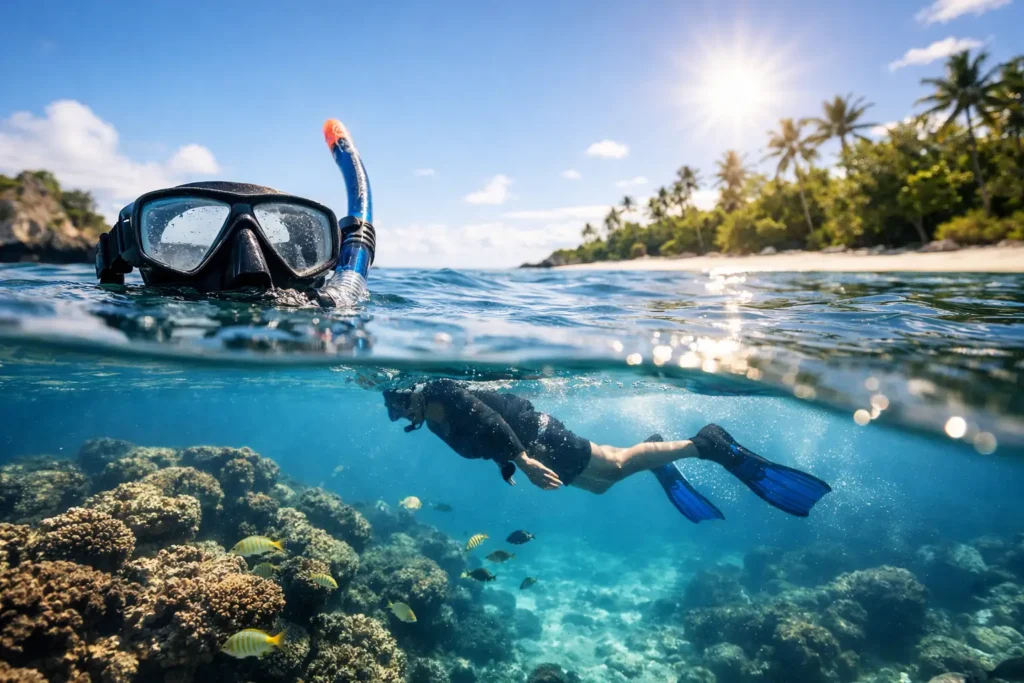
You can do everything right – pack the mask, clear the morning, drive an hour, rally a buddy – and still end up staring at green-brown water with two feet of visibility. That is exactly why a snorkeling conditions guide matters. Good sessions are rarely about luck. They come from reading a few key signals before you leave home and knowing which ones matter most for the spot you plan to swim.
What a snorkeling conditions guide should actually help you do
Most people do not need more raw data. They need a faster way to answer one question: is this worth the trip right now? A useful snorkeling conditions guide should translate ocean variables into a simple go, maybe, or no-go call based on visibility, entry safety, and timing.
That sounds obvious, but it is where generic weather apps fall short. A forecast might tell you wind speed, swell height, or tide times. It usually does not tell you what those things mean for underwater clarity at a protected cove versus an open beach. For snorkelers, the difference between a great session and a wasted one often comes down to local context.
Start with visibility, not air temperature
If your main goal is seeing reef, rock, fish, or structure, visibility is the first filter. Warm weather does not help much if the water is churned up. Blue sky does not guarantee clear water either. Underwater conditions depend on what has been happening in the water, not just above it.
Visibility usually drops when swell stirs sand or sediment, when wind adds surface chop and mixes up the shallows, or when runoff pushes murky water into the lineup after rain. In some places, outgoing tide can carry cloudy water from bays and channels. In others, incoming tide brings cleaner ocean water back over the reef. This is where broad rules get tricky. The same tide that improves one spot can ruin another.
That is why experienced snorkelers learn patterns instead of chasing a single perfect number. They ask whether the spot is exposed or sheltered, sandy or rocky, shallow or deep, and influenced by river mouths, harbors, or cliffs.
Wind can make or break the session
Wind is one of the fastest ways to downgrade a snorkel plan. Even if the water still looks decent from shore, strong onshore wind can create chop, reduce comfort, and make surface swimming more tiring. It can also hide what the water is really doing by roughing up the top layer.
Offshore or light wind is often better for clarity and surface visibility, but there is a catch. Offshore wind is not automatically safe for every swimmer, especially at exposed entries or for less confident ocean users. Better-looking water is not worth much if the swim feels sketchy getting in or out.
For most recreational snorkelers, the sweet spot is usually light wind with manageable surface texture. If wind is building through the day, early sessions often win. That is one reason morning windows get such a strong reputation in so many coastal areas.
Swell size matters, but swell direction matters more than most people think
A lot of people check wave height and stop there. That misses half the story. A moderate swell hitting a fully exposed cove can trash visibility and make entries ugly, while a similar swell from a different direction might leave a protected spot surprisingly clean.
Direction tells you which parts of the coast are taking the hit. Period helps too. Longer-period swell carries more energy and can move more water than a shorter-period swell of the same size. That often means more surge around rocks, more sand in suspension, and less stable conditions near shore.
For snorkeling, surge is a bigger issue than many first-timers expect. Water may look calm enough from the beach, but once you are over reef or near rock, that back-and-forth push can make it hard to relax, equalize, or safely keep distance from structure. Clear water with heavy surge is still a compromised session.
Tide is local. Treat it that way
Tide advice gets thrown around like it is universal. It is not. High tide can improve access and depth at some reef spots, but it can also increase surge or push murk into a protected area. Low tide can sharpen visibility in one location and make another unusable because the entry gets too shallow or exposed.
The move is to learn what your specific spot tends to do on incoming, high, outgoing, and low tide. If you do not know yet, start building a mental log. Notice when the water cleaned up, when fish activity felt best, and when getting in or out was easiest.
This is where planning tools become useful when they turn tide, wind, and swell into a timing recommendation instead of making you interpret every chart from scratch. Searu is built around that exact problem: helping ocean users stop guessing and find better water windows without checking five different sources.
Rain, runoff, and recent history count more than the forecast alone
One clean forecast does not erase what happened yesterday. If a recent swell event stirred up the bottom, visibility can stay poor even after the ocean settles. If heavy rain hit upstream, runoff can impact clarity well beyond the storm itself.
This matters most near river mouths, storm drains, harbors, and enclosed bays. In those areas, water quality can also become part of the decision, not just visibility. A calm-looking shoreline after rain is not automatically a green light.
Always zoom out beyond the next few hours. Check the recent pattern. Ask what the ocean has been doing for the last one to three days, not just what it is doing right now.
How to judge a spot before you commit
A practical snorkeling conditions guide should help you stack variables in the right order. Start with safety and entry. If shorebreak, surge, current, or exposure make the entry questionable, that is your answer even if the water looks clear.
Next, look at likely visibility. Is the bottom sandy and easy to stir up? Is the cove protected from the current swell direction? Has wind stayed light enough to keep the surface clean? Then check timing. Conditions are rarely static all day. One two-hour window can be meaningfully better than the rest of the afternoon.
If you are traveling or trying a new coastline, local reports become extremely valuable. Photo-based check-ins and recent observations often reveal what forecasts cannot: whether the cove is actually blue, whether the kelp line is dirty, or whether the inside is surging too hard to enjoy.
Good conditions are not always perfect conditions
This is where experience matters. A beginner snorkeling over shallow reef may need calm surface conditions, easy entry, and strong visibility to have a good time. A more experienced ocean user might accept slightly lower visibility if the spot is protected and the marine life is active.
There is no universal threshold that works for everyone. Skill level, comfort in open water, familiarity with the spot, and the purpose of the session all matter. If you are taking kids, testing new gear, or swimming with a first-time buddy, your standard should be tighter. If you know the area well and have a mellow protected entry, you may have more flexibility.
The mistake is treating all “good” days as equal. Clear water with awkward entry is not the same as clear water with easy access and light wind. Pick the kind of good that matches the session you want.
A simple pre-session check that saves wasted trips
Before you head out, run a quick filter. Is the entry safe for your ability level? Is recent visibility likely good enough for the kind of snorkel you want? Are wind and swell trending better or worse during your planned window? Has recent rain or runoff changed the picture? And do you have a buddy or at least a clear plan if conditions feel off once you arrive?
That last part is not extra. Conditions can shift, and even solid forecasts have limits. The best planners still reassess at the shoreline. If the water says no, listen.
The real goal of a snorkeling conditions guide
The point is not to become a full-time marine forecaster. It is to make fewer bad calls and more good ones. When you understand how visibility, wind, swell, tide, and local history work together, you waste less time, avoid more disappointing sessions, and get in the water when it actually lines up.
That is the win most ocean people are after – fewer coin flips, more clear calls, and more mornings where the first thing you see through the mask makes the whole trip worth it.