
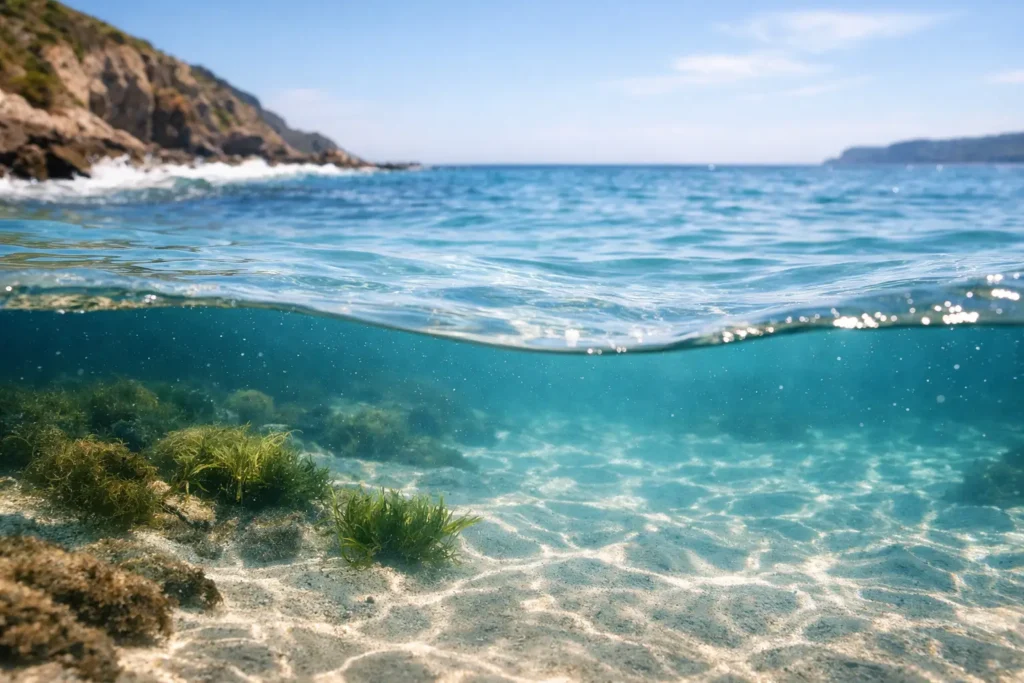
You can leave home under blue skies, get to the beach, and still end up staring into green-brown soup. That gap between “looks nice out” and “I can actually see underwater” is exactly why people ask what affects water clarity – because surface weather alone does not tell the real story.
For snorkelers, freedivers, scuba divers, and anyone planning a nearshore session, clarity is the difference between a great entry and a wasted trip. It affects safety, navigation, marine life viewing, photography, and whether getting in is even worth the effort. The good news is that water visibility is not random. It changes for reasons you can learn to read.
What affects water clarity most?
The short answer is movement, material, and timing. Water gets less clear when the ocean is stirred up or when extra particles enter the water column. It gets clearer when those inputs settle down and local conditions line up.
That means clarity usually comes down to a handful of connected factors: swell, wind, tides, rain and runoff, bottom type, currents, and local geography. None of them acts alone. A beach can handle a moderate swell just fine one day, then turn murky on the next cycle because the tide, wind angle, and recent rainfall all changed.
This is why one spot can be clean while another beach ten minutes away is blown out. If you want better sessions, you have to stop asking only “What’s the weather?” and start asking “What is the water doing?”
Swell is one of the biggest water clarity drivers
If there is one factor that consistently wrecks visibility, it is swell with enough size and period to move water on the bottom. When wave energy reaches the seafloor, it lifts sand, silt, and organic matter into suspension. That suspended material scatters light and cuts visibility fast.
Long-period swell is especially worth watching. Even if the ocean surface does not look chaotic from shore, a powerful long-period pulse can still move a lot of water underwater. That matters at reefs, coves, and sandy entry zones where surge can stir everything up below the surface.
Direction matters too. Some beaches stay relatively protected under one swell angle and get hammered under another. A spot tucked behind a headland may hold decent visibility while an exposed stretch nearby turns cloudy. For divers and snorkelers, this is where local pattern knowledge pays off.
Wind affects clarity above and below the surface
Wind changes water clarity in a few ways. The obvious one is surface chop, which makes it harder to see into the water even if underwater visibility is decent. But stronger wind can also directly reduce clarity by mixing the upper water column and pushing sediment around in shallow areas.
Onshore wind is usually the bigger problem for nearshore visibility. It drives surface turbulence toward the beach, creates chop, and often keeps suspended particles from settling out. Offshore wind can help clean up the surface at some spots, but that does not automatically mean the water below is crystal clear. If recent swell or runoff has already loaded the water with sediment, a cleaner surface may only improve the view from shore.
Wind timing matters as much as wind speed. A calm morning after a windy afternoon can be dramatically better than conditions later in the day, especially in shallow coastal zones. That is why the best water window is often not “today” in general, but a specific part of the day.
Tides can improve or reduce visibility
Tides are one of the most misunderstood answers to what affects water clarity. People often want a simple rule like “high tide is always better,” but the truth depends on the location.
At some beaches, incoming tide brings in cleaner offshore water and improves visibility. At others, outgoing tide carries sediment, runoff, or harbor water into the area and makes things worse. In shallow reef zones, lower tide can expose you to more bottom disturbance and concentrated surge, while a bit more depth on high tide can smooth things out.
Slack periods also matter. Around tide changes, water movement may briefly settle enough to improve clarity. But this is highly local. In some channels or passes, stronger moving water can actually flush an area and improve visibility. In enclosed or muddy zones, it can do the opposite.
The key takeaway is simple: tide is not good or bad by itself. It changes how water moves through a specific place.
Rain and runoff can ruin a session fast
If you have ever shown up after a storm and found brown water pushing off the beach, you have seen runoff at work. Rain sends sediment, debris, nutrients, and pollutants through streets, rivers, drains, and stream mouths into the ocean. That can crush visibility quickly, especially near urban coastlines and river-influenced beaches.
Heavy rain is the obvious trigger, but even moderate rain can matter if the watershed drains efficiently into the coast. Visibility may stay poor for a day or two after the weather clears because the runoff pulse is still moving through the system.
This is also where safety matters beyond visibility. Runoff can carry bacteria and contaminants, so poor clarity after rain is not just a bad photography day. It can be a sign to wait it out.
Bottom type changes how easily the water gets stirred up
A sandy beach and a rocky reef do not respond the same way to the same conditions. Fine sand and silt are easily suspended and can stay in the water for a while, especially in shallow areas with steady wave action. Rocky or hard-bottom zones may stay clearer under similar energy because there is simply less loose material to kick up.
That said, reefs are not automatically clear. Algae, broken shell, organic matter, and surge through reef structure can all affect visibility. Kelp areas add another layer – they can sometimes buffer chop and trap sediment differently, but they can also reduce perceived visibility depending on density and light.
If you know the bottom composition of your spot, you can make better calls. Soft-bottom areas tend to punish even small increases in energy. Hard-bottom areas may hold up longer and recover faster.
Currents, upwelling, and local geography matter more than people think
Not every clarity change comes from obvious surf or weather. Currents can move cleaner water in or push murk through an area. Upwelling can bring colder, nutrient-rich water that affects water color and particulate levels. In some places that means reduced visibility. In others, it can help depending on what water mass replaces what.
Local geography shapes all of it. Headlands block swell. Bays trap sediment. Harbors introduce boat traffic, runoff, and stirred bottom material. River mouths create shifting plumes that can turn a clean beach dirty within hours.
This is why broad regional forecasts only get you so far. Visibility is hyper-local. A single point, cove, jetty, or reef edge can change the whole outcome.
What affects water clarity day to day is usually a combination
Most bad visibility days are not caused by one thing. They are caused by overlap. Maybe a long-period swell stirred the bottom yesterday, onshore wind kept the surface mixed overnight, and a dropping tide pushed dirty water through the area this morning. None of those alone tells the full story. Together, they explain the murk.
The flip side is true too. Great water often comes from stacked positives: smaller swell, light wind, favorable tide movement, no recent rain, and enough time for sediment to settle. Those are the windows ocean users chase.
That is also why planning gets frustrating when your information is scattered across tide charts, surf reports, weather apps, and random local posts. Reading what affects water clarity means combining the pieces, not checking one number and hoping for the best.
How to make better calls before you go
Start with the recent trend, not just the current moment. Ask what the ocean has been doing for the last 24 to 72 hours. A spot that looks calm now may still be dealing with suspended sediment from yesterday’s swell or runoff.
Then check the key variables together: swell size and period, wind direction and timing, tide stage, and recent rainfall. After that, filter everything through the specific spot. Is it protected from the swell angle? Does outgoing tide usually dirty it up? Does it sit near a creek mouth or harbor?
This is where a tool like Searu makes sense for the way people actually plan sessions. Instead of forcing you to stitch together raw marine data on your own, it helps translate those conditions into a practical clarity outlook, timing window, and real-world check-in signal. That saves time, but more importantly, it helps you decide with more confidence.
No system will make the ocean perfectly predictable. Conditions shift, and local spots always have their quirks. But if you understand what affects water clarity, you stop guessing and start recognizing patterns. And once you can spot those patterns, you waste fewer trips, choose better windows, and get in when the water is actually worth it.
The next time a beach looks fine on the surface, remember this: clear water is usually earned before you arrive, through the right mix of swell, wind, tide, and local timing.