
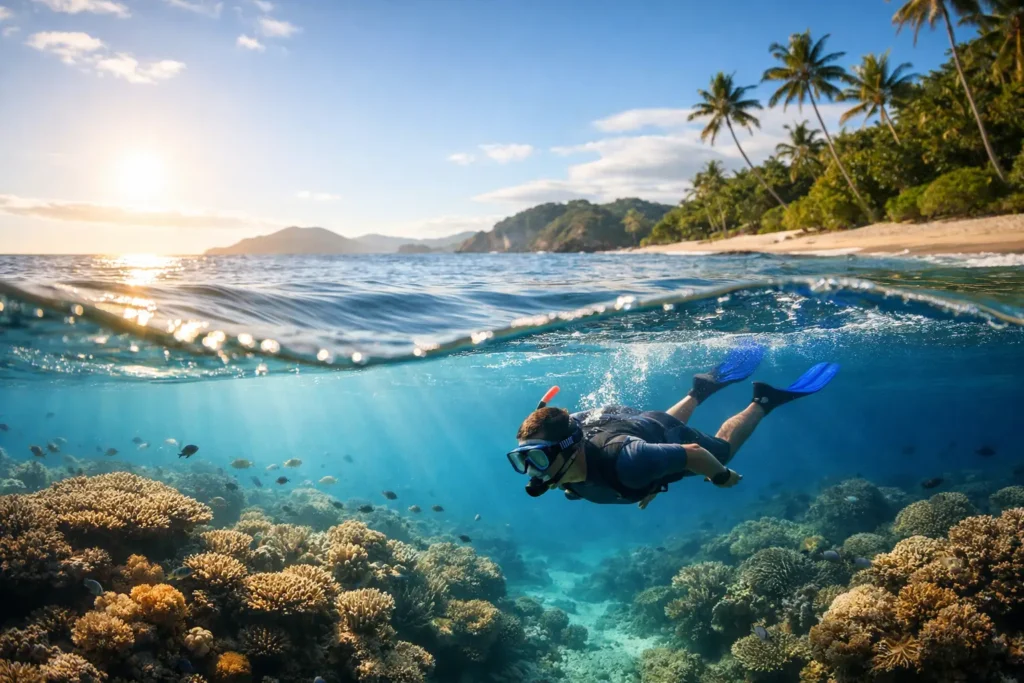
You can arrive at a reef under blue skies and still find five feet of visibility, suspended sand, and a session that is not worth the swim. That is why the best tide for snorkeling visibility is not a universal high-tide or low-tide answer. It depends on how water moves through your specific coastline.
Tide can bring clean offshore water across a reef, or it can pull cloudy lagoon water, river runoff, and stirred-up sediment into the same spot. Add wind, swell, recent rain, and the shape of the bottom, and the tide chart becomes one piece of a much bigger visibility call.
The goal is simple: stop guessing, understand the pattern at your spot, and get in when conditions line up.
Is high tide the best tide for snorkeling visibility?
At many shallow reefs, high tide or the final stage of an incoming tide offers the best chance of clear water. Higher water can cover sand patches and reef shelves that would otherwise be agitated by waves. It may also allow cleaner ocean water to push farther into a bay, cove, or reef flat.
This is especially common at snorkel sites with a shallow entry and a reef just offshore. More depth over the reef reduces the chance that small waves will churn sand into the water column. It also gives snorkelers more room to clear coral and avoid scraping across a shallow section.
But high tide is not automatically clear tide. In a harbor, canal-fed bay, or enclosed lagoon, a rising tide can carry murky water inward. If the area has received rain, the incoming flow may also mix with runoff that has been sitting near shore. The water level looks inviting, but the visibility can stay flat.
A better rule is this: high tide often helps at open, shallow reef sites. At protected or runoff-prone sites, watch the direction and source of the moving water instead of relying on the high-tide label alone.
Why the incoming tide often works
An incoming tide is frequently a strong visibility window because it can replace nearshore water with cleaner water from offshore. When the ocean outside a bay or reef is clear and calm, that incoming push may improve conditions noticeably over an hour or two.
Look for a site where the flood current enters from the open ocean and moves across the area you plan to snorkel. That is a promising setup. Water may become deeper, calmer over the bottom, and clearer as the tide builds.
There is a trade-off. A strong incoming tide can produce a current that is uncomfortable or unsafe for casual snorkelers, especially around channels, reef passes, inlets, and narrow points. Clear water is not a green light if you cannot comfortably exit, hold position, or stay connected to your buddy.
For many recreational snorkelers, the sweet spot is not the fastest part of the flood. It is often the period leading into high tide, when water has risen enough to settle the site but the current has not peaked.
Slack water can be useful, but it is not magic
Slack tide is the short period around high or low tide when the current changes direction. At places where moving water kicks up sand or makes a reef difficult to explore, slack can be a more relaxed time to enter.
That said, slack water does not clean the water by itself. If wind, swell, or runoff has already filled the area with sediment, a quiet current will not make it disappear on schedule. It can help prevent more disturbance, but clarity still depends on what was happening before you arrived.
At tidal inlets and passes, slack is often safer than either side of a strong tide. Treat it as a timing advantage, not a visibility guarantee.
When low tide can deliver the clearest water
Some locations are clearest on an outgoing tide or near low tide. This is most likely when a bay, lagoon, or estuary holds murky water and the falling tide flushes it toward the open ocean. If clearer water is waiting just outside the area, the end of the outgoing cycle can improve the view.
Low tide can also work along deeper rocky shorelines where the bottom does not have much loose sand to stir. The water may be clear, the current may be manageable, and the exposed structure can make entry points easier to read.
The downside is depth. A low tide that clears a channel can leave a reef flat too shallow to snorkel safely. You may be closer to sharp coral, sea urchins, or rocks, and even a small wave can make a shallow exit sketchy. Low tide also concentrates people into the few available channels, which adds another reason to choose your line carefully.
If your favorite spot is low-tide clear, know its minimum depth and exit route before you commit. Visibility is only useful when the session is still safe.
The conditions that can overpower the tide
Tide matters, but it is rarely the top visibility variable after a rough weather event. A perfect incoming tide cannot instantly fix water that has been churned by wind or loaded with sediment from rain.
Watch these four factors alongside the tide chart:
- Wind direction and speed: Onshore wind pushes surface chop and suspended sand toward the coast. Offshore or light wind often gives the water time to settle, though offshore wind can make surface conditions harder at exposed sites.
- Swell size and period: Long-period swell can stir the bottom even when the surface looks calm. Shallow reefs, sandy coves, and shore breaks are especially sensitive.
- Rain and runoff: Rivers, storm drains, and hillside runoff can discolor coastal water for days. Avoid swimming near runoff outlets after heavy rain, both for visibility and water-quality reasons.
- Site shape: A protected cove may stay clear while the next beach over is blown out. A narrow channel may run clean on one tide direction and cloudy on the other.
Think of tide as the water-moving variable. Wind and swell decide how much material gets stirred up. Rain decides how much dirty water is available to move around. Your site decides where all of it goes.
How to find your site’s clear-water pattern
The fastest way to learn a location is to compare what the forecast said with what you actually saw. After a few sessions, patterns start to show up: north wind ruins the south-facing cove, incoming tide clears the reef after noon, or outgoing tide turns the channel green after rain.
Before heading out, check the tide stage, wind direction, swell, rainfall, and the latest local observation. A visibility outlook is more useful when it translates those inputs into a practical window rather than leaving you to compare five separate charts.
Then verify at the water. Look from an elevated point if possible. Check whether you can see bottom detail beyond the shore break, whether foam lines are carrying brown water, and whether the water is getting clearer or cloudier with each set. Talk to people exiting the water. A recent check-in from someone who was actually at the site can beat a generic coastal forecast.
Searu is built around that decision: combining tide, wind, swell, and local observations into a clearer read on whether a session is worth the gear load, fuel, and planning.
Build a simple personal log
You do not need a spreadsheet worthy of a marine lab. Keep a quick note after each snorkel: location, tide stage, wind, swell, rain in the previous few days, and a rough visibility estimate. Add whether the current was comfortable and whether the entry changed with the water level.
After five to ten visits, you will have something better than a rule of thumb. You will know what clear looks like at your site, not just what a tide table suggests should happen.
Plan for visibility without ignoring safety
The clearest window can still be the wrong window for your experience level. A fast tide through a pass, offshore wind that complicates a return to shore, or swell breaking over a shallow reef can turn a good visibility report into a poor session choice.
Go with a buddy, agree on a turnaround point, and choose an exit before entering. If the water is getting murkier, the current is increasing, or the surface is becoming harder to manage, call it early. A short, clear snorkel is better than pushing into conditions that are changing against you.
The best tide for snorkeling visibility is the one that brings clean water to your specific site while wind, swell, depth, and current remain manageable. Learn that local rhythm, check the latest conditions, and leave room to change plans. The reef will still be there when the water lines up.