
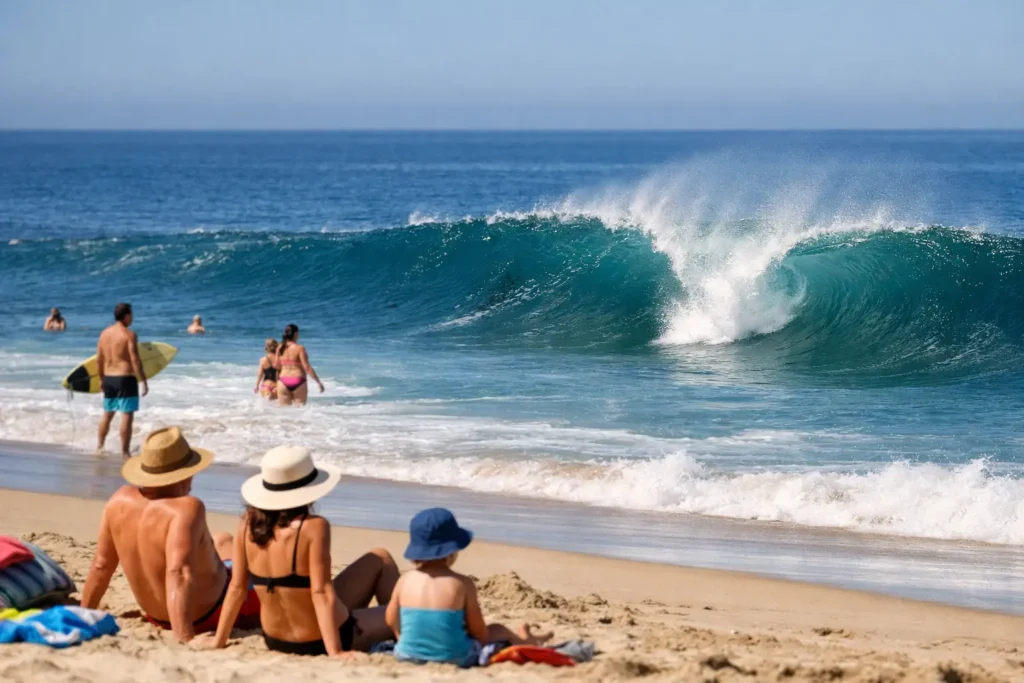
A beach parking lot can look perfect while the water is a total miss. Sun out, light breeze, plenty of towels on the sand – and ten feet offshore, the visibility is blown out, the current is pushy, and the session you had in mind is already off the table. For beachgoers who actually plan to get in the water, that gap matters.
That’s the difference between visiting the coast and using it. If you snorkel, freedive, shore dive, or just want a calm, clear swim, a generic beach forecast only gets you halfway there. You need to know whether the ocean lines up for the kind of day you want, not just whether the sky looks good from the boardwalk.
Why beachgoers need more than a weather app
Most forecasts are built for surface conditions. They tell you air temp, cloud cover, maybe wind speed, maybe surf height. That’s useful if your whole plan is a walk on the beach. It’s not enough if you care about what the water will actually feel and look like once you gear up and commit.
Visibility is the big miss. Water clarity changes the entire session. A calm-looking shoreline can still hide stirred-up sand, runoff, plankton bloom, or leftover swell energy that turns a dive into a short, frustrating lap near the entry. Beachgoers who are entering the water need a practical read, not a pile of raw data points that still leave them guessing.
The same goes for timing. Conditions are rarely just good or bad all day. A spot can be messy at sunrise, clean up mid-morning, then get worse again when wind shifts or tide changes. If you only check a basic forecast once, you can easily miss the best window and show up for the worst one.
What beachgoers should actually check before heading out
The right call usually comes from reading a few variables together, not chasing one number. Wind matters, but so does swell direction. Tide matters, but only in context. Water clarity matters, but it changes differently from one cove, reef, or beach to the next.
Wind changes more than comfort
A lot of people treat wind like a convenience factor. Will it be annoying on the sand? Will it make the air feel cooler? For ocean users, wind has bigger consequences. It can chop the surface, reduce visibility, affect entry and exit, and make a calm session feel busy fast.
Light wind is not automatically good either. If a spot is already carrying leftover swell or sediment, low wind won’t magically clear it. On the other hand, a moderate offshore pattern at the right location can improve surface conditions enough to make a session worthwhile. It depends on local orientation, recent conditions, and what happened over the last day or two, not just what’s happening right now.
Swell affects clarity even when waves look manageable
This is one of the biggest reasons beachgoers get fooled. You look at the shoreline and the surf doesn’t seem huge, so it feels safe to assume the water is fine. But swell energy can still be moving sand, pulsing through the reef, or creating surge underwater that makes visibility poor and movement harder than expected.
That matters even more for snorkelers and divers. You’re not just asking whether you can get in. You’re asking whether the session will be worth the drive, the gear prep, and the risk. Small-looking waves can still produce bad underwater conditions. Clean water often needs more than a mellow beach face.
Tide can make or break the session window
At some spots, tide is the difference between easy access and a sketchy entry. At others, it changes current, depth over reef, or how much sediment gets stirred into the water. There is no universal “best tide” for every beachgoer or every break.
That’s where local knowledge matters. A high tide might improve entry at one shoreline and ruin visibility at another. A dropping tide can open up a better window in one area while exposing hazards somewhere else. If your planning process doesn’t account for spot-specific tide behavior, you’re still rolling the dice.
The real cost of bad beach planning
A missed session is not just disappointing. It costs time, gas, energy, and often a lot of coordination. If you dive, it might mean loading tanks, checking gear, and driving an hour to confirm what a better planning tool could have told you in minutes. If you’re traveling, it might mean burning one of your only open windows on a beach that was never going to deliver.
There’s also the safety side. Beachgoers who arrive underprepared are more likely to force bad decisions. Maybe they enter because they already made the drive. Maybe they go solo because a partner backed out and they don’t want to waste the day. Maybe they underestimate current or poor visibility because conditions looked fine from shore.
That’s how marginal days turn into avoidable problems.
Better planning means better beach days
The goal is not to make the coast feel complicated. It’s to make the decision simpler. Instead of bouncing between tide charts, surf cams, marine forecasts, local group posts, and text threads, beachgoers need a faster way to answer one question: is this a good time to go for what I actually want to do?
That answer should be built around use, not just data. A casual swimmer, a shell-hunting family, and a freediver do not need the same forecast. The freediver cares about visibility, current, and timing. The family may care more about gentler surf and easier entry. Good planning starts by matching conditions to the session.
Why local reports still matter
Forecast models are powerful, but they can’t see everything. A protected cove may be cleaner than nearby open coast. A recent rain event may trash one area and leave another relatively usable. A harbor outflow, boat traffic, or localized algae can change the picture quickly.
That’s why real observations matter so much. Photos, check-ins, and on-site reports help close the gap between prediction and reality. For beachgoers who care about underwater conditions, community insight is often the piece that turns a maybe into a clear yes or no.
Why simplification is the feature
Most ocean users do not want more tabs, more charts, or more jargon. They want clarity. If the water is likely to be dirty until noon, say that. If there’s a short clean window before wind comes up, show it. If conditions look fair for a swim but weak for a dive, that distinction helps.
That’s where a tool like Searu fits naturally. Instead of making beachgoers translate raw tide, wind, and swell inputs on their own, it helps turn those variables into usable timing and visibility guidance, backed by local observations and community check-ins. That saves time, but more importantly, it improves decisions.
Beachgoers are changing how they use the coast
There’s a bigger shift happening here. More people are treating ocean time like a planned session, not a random outing. They want to move fast when conditions line up and avoid wasting a day when they don’t. That mindset is practical, but it also makes the experience better.
You show up with the right gear, at the right time, with a realistic plan. You know whether to bring fins or leave them in the car. You know whether to text a buddy or skip the solo mission. You know whether the beach is offering a real opportunity or just a nice backdrop.
That doesn’t remove spontaneity. It gives spontaneity better odds.
How beachgoers can stop guessing
Start with a simple rule: don’t judge water conditions by the parking lot. Check timing, not just the daily forecast. Look for visibility signals, not just wave height. Pay attention to trend, not just current conditions.
If you’re new to this, keep notes on the spots you use most. Watch how tide shifts affect entry. Notice what kind of swell dirties the water. Learn which wind directions ruin the surface and which ones barely matter. Over time, your decisions get faster and sharper.
And if you already know your local coast pretty well, the next level is reducing friction. The best planning tools don’t replace your judgment. They help you use it sooner, with better inputs and fewer wasted checks.
The coast is always changing. That’s part of the draw. But beachgoers who want better sessions don’t need to leave every decision to chance when a little timing can change the whole day.