
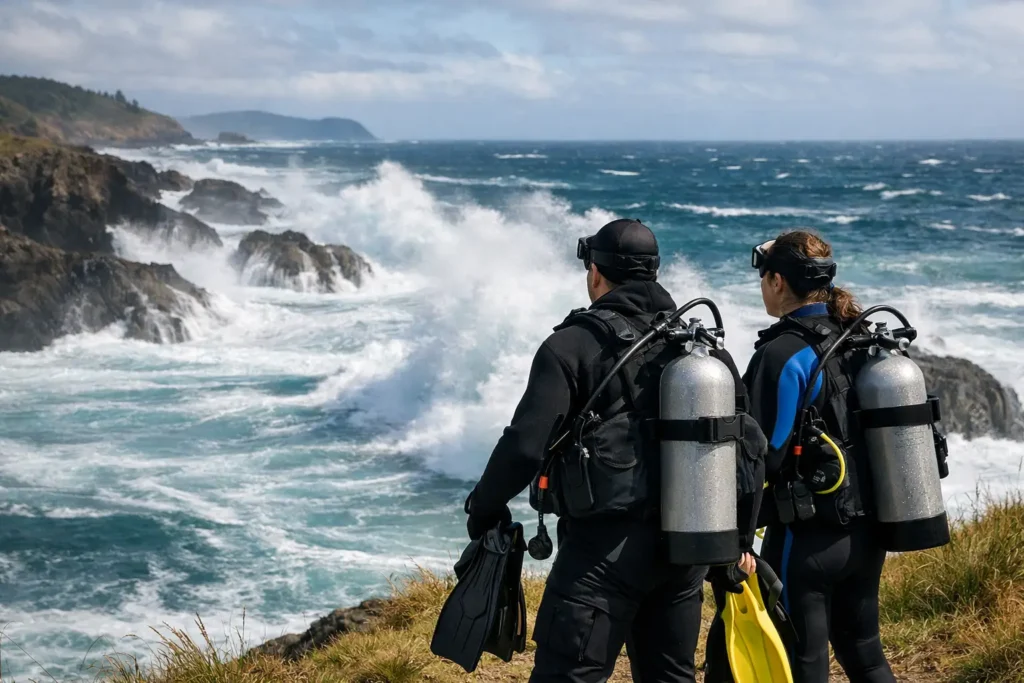
A blown-out dive day usually starts with a forecast that looked fine from your couch. You load tanks, prep your mask, convince a buddy to make the drive, and arrive to whitewater, stirred-up sand, or visibility that disappears at arm’s length. The best ways to avoid blownout dives come down to reading the full coastal picture before you commit – not just checking whether it will rain.
For divers, freedivers, and snorkelers, surface conditions are only part of the call. Wind direction, swell angle, tide movement, recent runoff, and what people actually saw in the water can turn the same beach from clear and calm to a complete write-off in a few hours. Stop guessing. Build a better go-or-no-go routine.
Start With Visibility, Not Just Weather
A standard weather forecast can tell you the air temperature, wind speed, and chance of rain. That helps, but it does not answer the question that matters when you are carrying a dive bag to the shoreline: Can I see underwater?
Water clarity is affected by several conditions working together. Strong onshore wind can churn up the nearshore zone. A fresh swell can pull sand into the water, even when the ocean looks manageable from the parking lot. Rain upstream can send sediment, debris, and runoff toward your site long after the clouds have cleared.
Treat visibility as its own planning category. Look for a local clarity outlook that translates those inputs into a practical read, then compare it with recent reports from the exact coast or cove you plan to visit. A clear report from one protected site does not mean the exposed beach ten miles away is equally clean.
Read Wind Direction Like a Local
Wind speed gets most of the attention, but direction often makes the bigger difference. The same 12-knot breeze can either smooth out a protected shoreline or turn it into a washing machine.
Onshore wind pushes surface chop and suspended material toward the coast. It can make entries harder, reduce visibility, and build conditions through the day. Offshore wind often keeps the immediate shoreline cleaner, but it is not an automatic green light. It can create difficult surface swims, push floaters away from shore, and make exiting a shallow site more demanding.
Cross-shore wind falls somewhere in between. Its impact depends on the shape of the coastline, nearby points, reefs, jetties, and how protected the site is. This is why broad regional forecasts can be misleading. A west-facing beach and a tucked-away harbor can respond very differently to the same wind.
Watch the trend, not only the current number
A morning with light wind can still be a poor bet if a stronger afternoon onshore pattern is expected. If your site is exposed, an early session may be the smart move. If wind has been blowing hard onshore for two days, one calm morning may not be enough for the water to settle and clear.
Think in windows. Ask when conditions are likely to line up, not whether the whole day is technically possible.
Check Swell Height, Period, and Direction Together
Swell is not one number. A two-foot swell at a short period can feel messy and constant. A larger, longer-period swell may arrive in more defined sets, but still carry enough energy to make entries dangerous or stir up the bottom.
Direction is where the local call gets real. A south swell might roll straight into one beach while a headland blocks much of it at another. A site that is usually protected can become exposed when the swell shifts by only a few degrees. Before heading out, know which directions affect your regular spots and which ones create a backup option.
Bottom type matters too. Sandy bottoms often lose visibility quickly when wave energy rises. Rocky reefs can stay surprisingly clear in moderate surface movement, although surge may make the dive uncomfortable or unsafe. Kelp forests, caves, and shallow ledges add their own hazards when swell is up.
Do not judge swell from the horizon alone. By the time you are standing at the waterline, you may already be committed to a long drive, parking fees, gear prep, and a disappointed buddy. Use site-specific conditions to make the call earlier.
Time the Tide for Your Site
Tide is not universally good or bad. It depends on where you are going and what you are trying to do.
At some shore dives, slack tide reduces current and makes an entry far easier. At others, high tide gives you enough water to clear rocks, reach a reef, or avoid walking across a shallow sandbar. A moving outgoing tide can pull murky water from bays and estuaries toward the coast. Incoming water may bring clearer ocean water into certain areas, but that is not guaranteed after a swell or rain event.
The useful question is not, “Is high tide best?” It is, “What does this site do at this tide stage?” Keep notes after your sessions. Over time, you will see patterns: a cove that cleans up on the flood, a reef that gets surgey near high water, or a harbor mouth that turns into a current problem on the ebb.
This is also where local observations beat generic advice. Conditions are coastal, but decisions are site-level.
Give Runoff Time to Clear
Rain can blow up a dive plan even when the ocean forecast looks calm. Urban runoff, river discharge, and storm drains carry sediment into the water, reducing clarity and sometimes creating water-quality concerns. The impact is especially noticeable near creek mouths, marinas, enclosed bays, and low-lying coastal areas.
How long should you wait after rain? There is no single answer. Light rain followed by calm conditions may have little effect at an open, rocky site. Heavy rainfall near a watershed can affect visibility for days, especially when surf keeps the sediment moving.
Check rainfall totals, look at the recent trend, and give extra weight to reports from people who were in the water after the storm. If the water looks brown, has debris lines, or smells unusual, that is useful information, not a challenge to push through.
Use Real-Time Reports Before You Leave
Forecasts predict. Local reports confirm.
A recent photo, a visibility estimate from another diver, or a check-in from a snorkeler can save a wasted trip. Look for reports that include when and where the observation was made. A “clear today” update is less useful if it came from a protected inlet at 7 a.m. and you plan to enter an exposed beach at noon.
Community reports work best when you read them alongside the conditions. If three people report five-to-eight-foot visibility after a rising swell, that tells you more than a single optimistic comment. If a photo shows clear water but the wind has shifted onshore since it was posted, adjust your expectations.
Searu brings visibility outlooks, environmental snapshots, and real-world check-ins into one planning view, so you can spend less time bouncing between forecasts and more time deciding whether the session is worth it.
Build a Backup Plan Before Conditions Turn
The most reliable divers are not the ones who force every planned dive. They are the ones who arrive with options.
Pick a primary site and at least one backup that handles a different wind or swell direction. If your first choice is an exposed sandy beach, your backup might be a protected rocky cove or a harbor-side site with known limitations. Make sure the alternative is actually appropriate for your training level, access conditions, and local rules.
Your backup can also be a different kind of ocean day. If visibility is poor, skip the dive and go for a shoreline walk, work on gear maintenance, or reschedule for the next clean window. Calling it early is not losing a day. It is protecting your time, gear, and safety margin.
Do Not Let Momentum Override the Conditions
The most expensive mistake is thinking that because you drove there, you have to get in. That mindset turns marginal conditions into bad decisions.
Pause at the site and reassess. Watch several wave sets, not just the quiet minute between them. Check whether the entry and exit still look manageable. Talk honestly with your buddy about comfort level, current, surge, visibility, and turn-around points. If either person is unsure, the plan changes.
Low visibility alone is not always a no-go, particularly for trained divers at familiar sites. But it narrows your margin for navigation, buddy contact, entanglement awareness, and handling a problem near shore. Add strong surge, current, boat traffic, or a difficult exit, and the trade-off changes fast.
The goal is not to chase every possible session. It is to get in when conditions line up well enough for the kind of water time you want. Read the pattern, use local reports, coordinate with a buddy, and save your best effort for water that gives something back.