
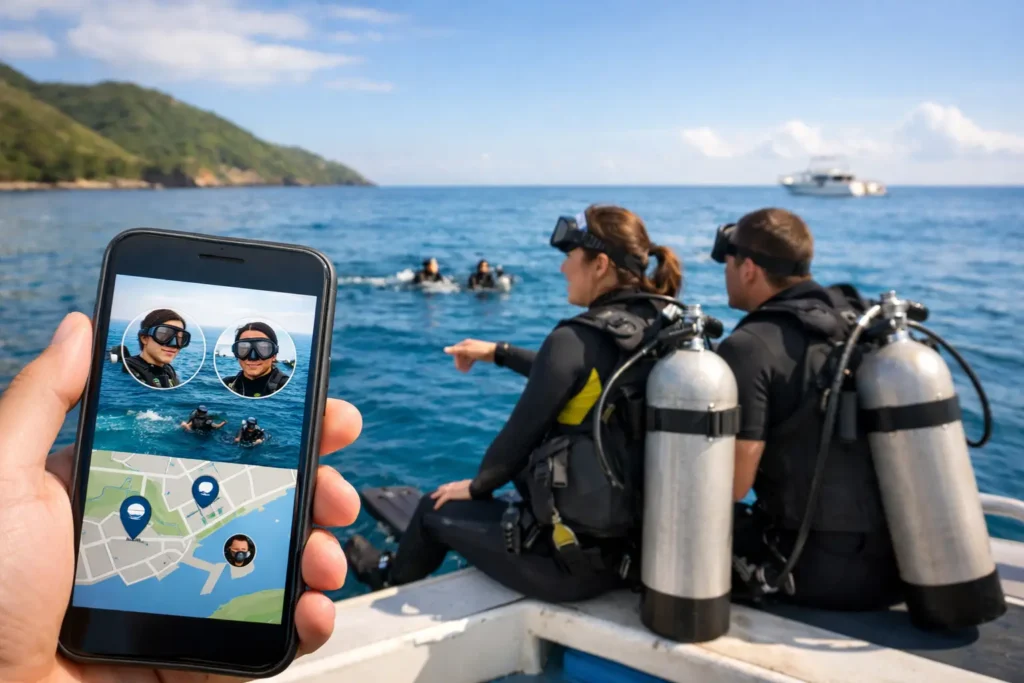
You loaded the tanks, cleared the morning, drove to the coast, and then hit the usual problem – the vis is worse than expected and your dive partner bailed. That is exactly where a buddy finder for divers stops being a nice extra and starts feeling essential. If you care about visibility, timing, and not wasting a day on a bad call, finding the right person for the right session matters almost as much as the conditions themselves.
For a lot of divers, the hard part is not deciding whether they want to get in the water. It is lining up the right window, confirming the conditions are actually workable, and finding someone who wants the same kind of session. Generic social platforms are slow, scattered, and full of dead-end messages. Traditional weather apps can tell you wind and swell, but they do not tell you whether the water will actually look worth diving. A good match tool should solve both problems at once – who you are diving with and whether now is even the time to go.
What a buddy finder for divers should actually do
A real buddy finder is not just a chat board with profile pictures. It should help divers connect around practical details that decide whether a session happens or gets scrapped. That includes location, availability, experience level, and preferred type of dive, but it also includes timing around visibility and changing ocean conditions.
That last part gets overlooked. A lot of buddy matches fail because two people may both be available, but one is chasing a clear shallow reef window while the other is willing to slog through low vis for a training dive. Those are different goals. The best tool helps people find alignment before anyone starts loading gear.
For scuba divers, that might mean matching by certification level, comfort in current, or shore versus boat preference. For freedivers and snorkelers, it may be more about depth goals, entry style, and whether someone is looking for a short sunrise session or a longer exploratory run. The stronger the context, the fewer wasted messages.
Why divers struggle to find the right buddy
Most people do not have a huge bench of reliable ocean partners on standby. Even in active coastal areas, schedules shift, conditions change fast, and confidence levels vary from person to person. One diver might be ready for a spontaneous afternoon entry if the water cleans up. Another needs a full day of planning and wants a very conservative call.
There is also the trust issue. Diving with someone new is not the same as meeting for coffee. You want to know whether they are experienced enough for the plan, realistic about conditions, and clear about the type of outing they want. Without that context, buddy matching turns into a gamble.
Then there is the visibility problem. Plenty of divers can find someone who says yes. Far fewer can find someone who says yes to a spot that is actually worth diving that day. If your process is bouncing between marine forecasts, local group chats, and old reports that no longer reflect what the water looks like right now, you are still guessing.
The best buddy matches start with better session planning
This is where the topic gets more useful than most articles make it sound. A buddy finder works best when it sits next to real condition planning, not apart from it. If you know the likely clarity outlook, the best time window, and whether recent check-ins show the water is cleaning up or falling apart, your buddy search becomes much more efficient.
Instead of posting, Anybody free tomorrow, you can be specific. North side looks clearest from 8 to 11. Shore entry. Intermediate scuba. Want one person comfortable in mild surge. That kind of request gets better responses because it removes friction. People can say yes or no quickly, and the people who say yes are far more likely to be the right fit.
This is also where a planning-first platform has an edge over broad social apps. Searu, for example, combines visibility outlooks, timing windows, local observations, and a built-in buddy system so you are not piecing together five separate tools just to make one morning dive happen. That saves time, but more importantly, it cuts down on the false starts that drain motivation.
Features that make a buddy finder for divers worth using
The difference between a useful buddy tool and a noisy one comes down to filters and context. If everybody is thrown into one giant feed, divers spend more time sorting than connecting. A better setup lets users narrow by coast, session type, timing, and confidence level.
Experience matching matters too, but it should be practical rather than rigid. Not every advanced diver wants a demanding dive, and not every newer diver is only looking for easy water. The better approach is to show what someone is comfortable with in real conditions. Calm reef. Limited current. Training session. Deep freedive. Photography-focused scuba. Simple details tell you a lot.
Recent activity is another underrated factor. A profile that shows current check-ins or session history gives more confidence than a static account with no signal. It helps answer a simple question divers always ask themselves before meeting someone new – is this person actually active, or are they just another inactive name in the app?
And yes, communication speed matters. Ocean windows can be short. If the water is turning on for a few hours, you do not want to wait all day for replies that lead nowhere.
Safety is part of the value, but it is not automatic
A buddy finder can reduce solo sessions, which is a big win, but matching with someone is not the same thing as matching well. Divers still need to vet each other, confirm the plan, and make sure expectations line up. That includes entry and exit points, max depth, gas planning if applicable, emergency contacts, and what happens if conditions look different on arrival.
There is also a real trade-off here. The faster you can match, the more tempting it is to treat any available person as good enough. That is not always the right move. Sometimes the smart call is skipping the session rather than forcing a pairing that does not feel aligned.
The best platforms support better decisions, but they do not replace judgment. If a person is vague about experience, dismissive about conditions, or pushing a plan that feels off, trust that signal.
What different divers need from a buddy finder
Not every diver is solving the same problem. A traveling scuba diver may need a local partner who knows the site and can help sanity-check conditions. A freediver may care most about safety, training focus, and whether someone is on the same page about technique and recovery. A snorkeler might simply want a reliable person for a clear, low-stress coastal session.
That means the best buddy finder for divers should not force everyone into the same mold. It should make different goals visible from the start. The more clearly people can state what kind of water time they want, the better the community becomes.
There is also a local versus visitor split. Locals often want efficient, repeatable matches with people who know the rhythm of the coastline. Visitors need fast orientation and current information. A strong platform helps both groups without making either feel out of place.
How to use a buddy finder without wasting time
Start with the conditions, not the conversation. If the window looks weak, the buddy search is already on shaky ground. When conditions line up, post with specifics and keep the plan tight. Mention the location area, target time, session type, and experience expectations.
Be honest about what you want. If you are only interested in clear water and an easy shore dive, say that. If you are looking for a serious training session, say that too. Clarity upfront saves everyone time.
Then treat first matches like screening, not commitment. A quick exchange should answer whether the plan fits, whether the person sounds prepared, and whether both sides are aligned on safety. If the answers are fuzzy, keep looking.
Finally, pay attention to community signals. Recent reports, check-ins, and photo-backed observations often tell you more than generic forecasts. A buddy system gets much stronger when it is connected to what the water is actually doing right now.
The best ocean days usually come together fast – clear window, right person, no wasted guesswork. A smart buddy finder helps make that happen, but the real win is bigger than meeting someone new. It is getting in when conditions line up, with more confidence that the session will be worth the effort.