
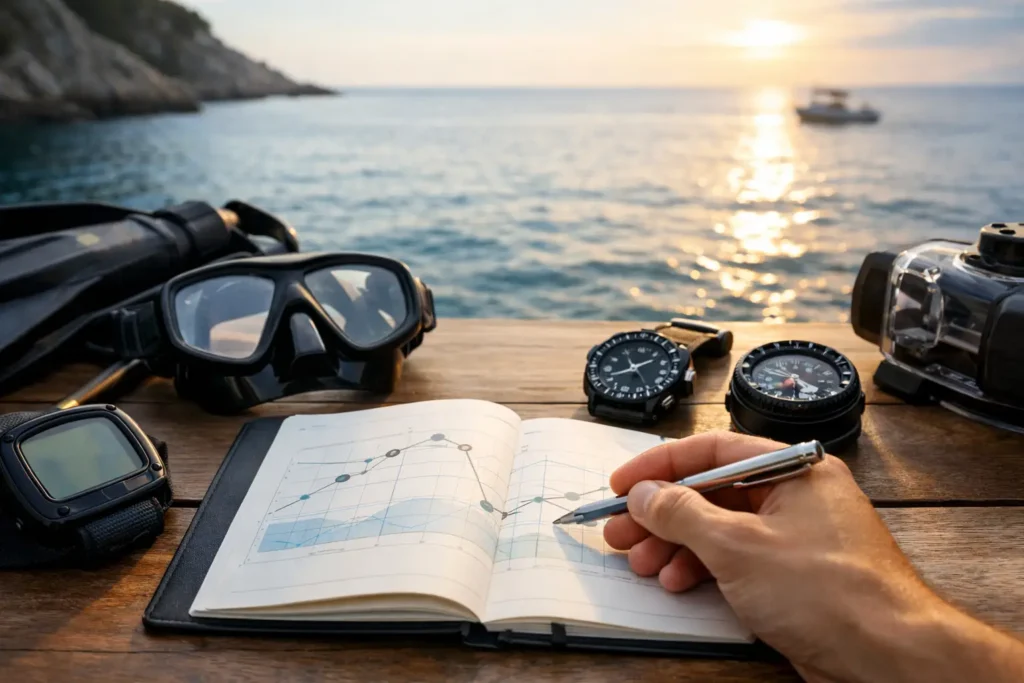
A tank can be full, your buddy can be ready, and the ocean can still hand you a green, silty disappointment. Learning how to plan dive timing means looking beyond the basic weather icon and choosing the window when visibility, current, light, and your own readiness have the best chance of lining up.
For divers, snorkelers, and freedivers, timing is often the difference between a forgettable gear haul and the session you drove out for. Stop guessing from one forecast. Build a quick read of the conditions that actually affect what happens below the surface.
How to Plan Dive Timing Before You Leave Home
The best dive time is not always the calmest-looking hour on a weather app. Surface conditions matter, but water clarity can be shaped by wind direction, recent swell, tides, rainfall, runoff, boat traffic, and the character of the site itself. A protected cove may be clean while an exposed point a few miles away is churned up.
Start with your goal. Are you planning a shallow reef snorkel, a shore dive, a freediving session, or a boat dive? A low-current tide change might matter most for a shore entry. For a deeper boat dive, surface wind and safe vessel operations may set the schedule. If you want photos or wildlife viewing, light angle and visibility deserve extra weight.
Then work backward from the session. Give yourself enough time for travel, parking, gear setup, a site briefing, a buddy check, and an unhurried entry. The ocean does not reward rushing to beat a predicted window.
Check the trend, not one data point
A single wind reading or tide chart can be misleading. What happened over the previous 12 to 48 hours often tells you more about clarity than what is happening this minute.
Light winds after several calm days can allow suspended sand to settle. A long-period swell can stir up a shallow reef even when the surface looks manageable. Heavy rain may send sediment and contaminants into coastal water hours or even a day later, especially near river mouths, storm drains, and enclosed harbors.
Look for the direction of travel: Is wind easing or building? Is swell dropping or arriving? Is the tide moving toward a slack period or accelerating? Favor windows with improving conditions over ones that are about to turn.
Read Tide for the Site You Are Diving
There is no universal rule that says high tide or low tide is always best. The right tide depends on local bathymetry, the entry, and the way water moves around that specific coastline.
At some shore dives, high tide gives you deeper water over rocks and an easier entry. At others, incoming water pushes clearer offshore water into the area, improving visibility. In tidal channels, though, the same incoming tide can create a current that is beyond the plan for a relaxed recreational dive.
Slack tide is often attractive because current can ease around the change between incoming and outgoing flow. But slack may be brief, may occur at different times below the surface, and may not eliminate surge near an exposed shoreline. Treat it as a planning clue, not a guarantee.
If you are new to a site, ask local operators, experienced dive partners, or reliable community reports which tide tends to work best. After a few visits, log your own observations: tide stage, visibility, current, wind, and entry conditions. Your notes become far more useful than generic rules.
Use Wind and Swell to Predict Visibility
Wind creates surface chop, but its bigger impact can be what it does to the water column. Onshore wind often pushes surface water, foam, and suspended material toward the coast. Offshore wind can flatten a protected shoreline, but it can also create awkward exits or carry you away from an intended route at exposed sites.
Direction matters as much as speed. A 10-knot wind may be harmless at a sheltered beach and a deal-breaker at an exposed one. Know which directions your site can handle. If the wind blows straight into the cove, expect more stirred-up water and a more difficult surface interval.
Swell needs the same local context. Check height, period, and direction together. A modest long-period swell can deliver powerful sets and surge, particularly around rocky entries, caves, jetties, and shallow reef. That surge may reduce visibility by lifting sand and can turn a normally simple exit into an unsafe one.
Do not let a clean-looking offshore forecast override what the sets are doing at the entry. If you cannot safely get in and out with your buddy and gear, the timing is wrong.
Plan Around Light, Not Just Daylight
Early morning is often a strong option for coastal sessions. Wind may be lighter before daytime heating picks up, crowds and boat traffic can be lower, and the water may not yet be disturbed by a busy beach day. Morning sun can also make it easier to inspect the surface and spot hazards depending on the orientation of the shore.
But early is not automatically better. A sunrise dive on the wrong side of a headland may put glare directly in your eyes. Low light also changes navigation, depth perception, and the way you read conditions from shore. For photography, the best window may arrive later, when the sun is high enough to improve color and ambient light underwater.
Give yourself a firm turnaround time. Plan to exit well before darkness unless you are trained, equipped, and intentionally conducting a night dive. A delayed entry, a longer swim, or an unexpected current can erase more daylight than expected.
Use Local Reports as Your Reality Check
Forecast models are useful, but they cannot see a plume of runoff, a surprise algae bloom, a recently dredged harbor, or the sediment kicked up by a crowded weekend. That is where recent reports from people who were actually in the water matter.
Prioritize observations that are specific: reported visibility range, water color, surge, current, entry difficulty, marine life, and the time the person was there. Photos help, but remember that cameras can make water look clearer or murkier than it felt in person. Compare several reports when possible.
Searu brings tide, wind, swell, clarity outlooks, and community check-ins into one planning view so you can spend less time bouncing between disconnected sources. Use any prediction as a starting point, then let current local observations confirm whether the window is worth the drive.
Build a Go, Caution, or No-Go Decision
Before loading the car, make the call simple. A go means conditions fit the site, your experience, and the day’s objective. Caution means the plan needs adjustment: choose a more protected site, shorten the route, delay for a better tide window, or bring an extra experienced buddy. No-go means conditions exceed your limits, visibility is too poor for the environment, or the entry and exit are not reliably safe.
Your personal limits belong in that decision. A diver comfortable in mild current from a boat may not be comfortable managing surge over slick rocks from shore. A low-visibility dive can be appropriate for trained buddies with a conservative plan and can be completely wrong for someone testing a new site.
Use this quick pre-entry check before committing:
- Can both buddies enter and exit safely in the current surf and surge?
- Is the expected visibility enough for navigation, separation procedures, and the planned depth?
- Are wind, swell, tide, and weather improving or deteriorating during the dive?
- Does everyone know the route, maximum time, turn pressure, and lost-buddy procedure?
- Is there a simpler alternate site or a clear reason to call it?
If the answer is uncertain, make the plan smaller or save the dive. Good ocean judgment is not about forcing every day into a session.
Make Better Timing Easier Next Time
The fastest way to improve is to compare the forecast with what you actually found. After each outing, record the entry time, tide stage, wind direction, swell, visibility, water temperature, current, and anything unusual. A few short notes reveal patterns quickly: the beach that clears on a falling swell, the reef that gets milky after afternoon wind, or the harbor that should be avoided after rainfall.
Share useful observations with your local community, too. A clear report can save someone a wasted trip. An honest warning about surge, murky water, or a difficult exit can prevent a bad decision before it starts.
The ocean will always keep some uncertainty. That is part of why it is worth returning to. Plan for the best window, stay ready to change the plan, and get in when the conditions truly line up.