
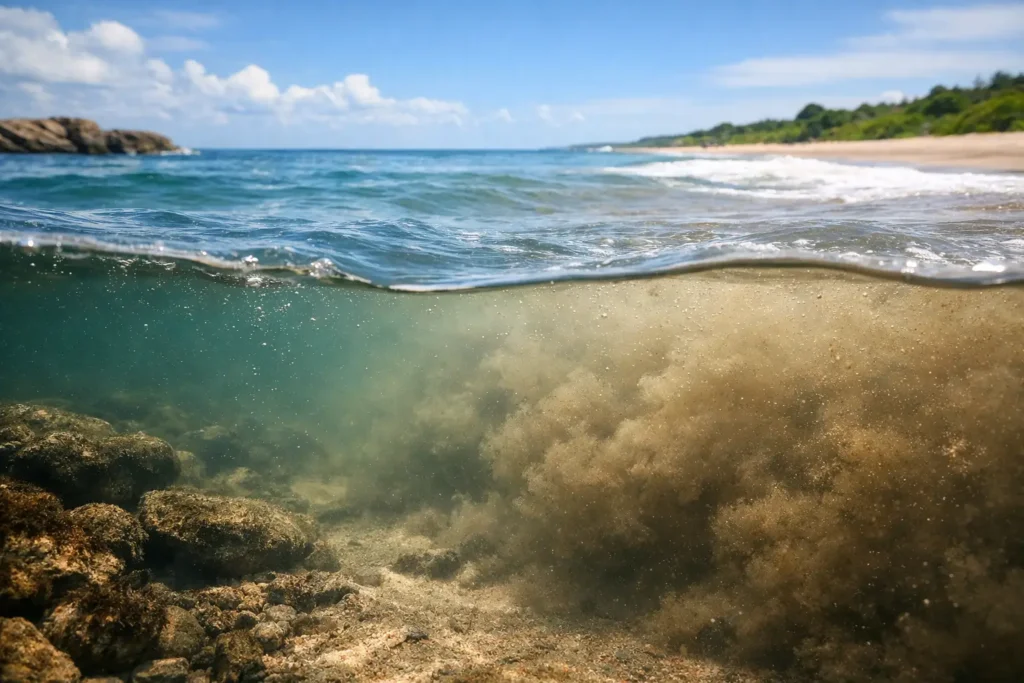
A beach can look calm from the parking lot and still deliver three feet of visibility once you duck under. That gap between what the surface says and what the water holds is why is nearshore water murky is such a common question for snorkelers, freedivers, divers, and anyone planning an ocean session.
Murky water is rarely random. Nearshore visibility changes when particles in the water column get stirred up, washed in, or held in place. Wind, swell, tide, rain, currents, bottom type, and even the shape of the coastline can all shift the picture fast. Stop treating visibility as a mystery. Read the forces that move it, then choose a window that is worth your gear, fuel, and time.
Why Is Nearshore Water Murky?
Nearshore water becomes murky when tiny particles scatter light before it can travel through the water. Those particles may be sand, silt, decaying seaweed, plankton, sediment from runoff, or organic material carried out of bays and estuaries. The more material suspended in the water, the shorter your visibility.
The key word is suspended. Sand sitting on the bottom does not ruin a dive. Sand lifted by a wave set does. A river can carry sediment for miles, but its effect may stay concentrated near an inlet until wind and current spread it along the coast.
Water color can offer a clue, but it is not a complete answer. Brown or tan water often points to sediment. Green water may mean plankton, runoff, or stirred-up organic matter. Dark blue water can still have poor visibility if suspended particles are present beneath a reflective surface. Your real question is not just what color the ocean is. It is what is in the water, where it came from, and whether the conditions are getting better or worse.
Wind and Swell Stir Up the Bottom
For most nearshore sessions, wind and swell are the biggest visibility movers.
Wind creates surface chop and pushes dirty water around
Local wind roughens the surface, making it harder to see into the water from shore. More importantly, sustained wind can generate short-period wind waves that agitate shallow bottoms. In sandy areas, that can turn clear water hazy within hours.
Wind direction matters as much as wind speed. Onshore wind commonly pushes surface water, foam, seaweed, and nearshore turbidity toward the beach. Offshore wind can sometimes flatten the nearshore surface and improve the view from shore, but it is not an automatic green light. Strong offshore flow can make entries, exits, and swims back to shore more demanding, especially for a long surface swim or a tired buddy team.
Crossshore wind is often messy. It may not build the largest waves, but it can move murky water sideways along the coast and make conditions inconsistent from one access point to the next.
Swell can cloud water long after a storm
A clean, sunny morning after a big swell does not guarantee clear water. Swell energy reaches the bottom in shallow areas and keeps sediment moving. Long-period swell is especially worth watching because its energy can feel deceptively powerful at the shoreline and around reefs, points, and coves.
The trade-off is local. A rocky reef may stay relatively clear during moderate swell because there is less loose sediment to suspend. A nearby sand-bottom cove can remain milky for a full tide cycle or longer. If you are chasing visibility, ask what the bottom is made of, not only how big the waves look.
Tide and Current Can Create a Short Clarity Window
Tide does not always control water clarity, but it can be the deciding variable near inlets, harbors, lagoons, river mouths, and estuaries.
An outgoing tide may carry darker, sediment-rich water from inland channels toward the ocean. If recent rain has added runoff, that outgoing flow can produce a visible plume and sharply reduce visibility near the mouth. An incoming tide may bring clearer offshore water back over a reef or beach break, improving conditions for a period.
But avoid treating incoming tide as a universal rule. At some sites, a flood tide stirs shallow flats or pushes cloudy harbor water into the area. Current direction, local bathymetry, rainfall, and wind can flip the expected pattern.
Slack water can be valuable because reduced current gives suspended particles a chance to settle and makes the session easier to manage. It is not always the clearest moment, but it is often a smarter time for a visibility-focused swim, particularly around channels and boat traffic.
Rain and Runoff Change More Than the Color
Heavy rain sends freshwater, soil, road debris, organic material, and nutrients into coastal water through creeks, storm drains, rivers, and channels. That runoff can make water look brown, tea-colored, or greenish, depending on the watershed and local bottom.
It also changes safety decisions. After significant rain, reduced visibility may come with increased bacteria levels, debris, strong outflow, and unpredictable currents near drainage points. For divers and snorkelers, that is not just a disappointing clarity report. It is a reason to give the site time, choose a more protected location, or skip the session.
How long does it take to clear? It depends. A light shower in a rocky, open-coast area may have little lasting impact. A major storm feeding a river system can affect nearby beaches for days, especially when onshore wind and swell keep the plume trapped near the coast.
Plankton, Algae, and Seasonal Water Changes
Not all murky water is caused by rough conditions. Sometimes the water is calm and still looks green, cloudy, or full of fine particles. Biological activity may be the reason.
Plankton blooms can reduce visibility even when wind is light and the sea is flat. Nutrient-rich runoff, changing temperatures, seasonal upwelling, and sunlight can all encourage plankton growth. In some places, this is part of the normal seasonal cycle.
A plankton-rich day can be frustrating if you want a wide-open reef view, but it is not automatically bad water. Fish life may be active, and conditions can still be manageable if you stay close to your buddy, use conservative navigation, and choose a site that matches your experience. The issue is not whether every session must be crystal clear. It is whether the visibility fits the plan.
Your Entry Spot May Be the Problem
Visibility can vary dramatically over a short stretch of coastline. One beach may be exposed to swell and churned sand, while a headland fifty yards away blocks the wave angle. A marina entrance can release cloudy water on one side while a rocky point nearby stays blue.
This is why broad regional forecasts often fall short. They can tell you the wind, swell, and tide, but not always how those inputs interact at your specific access point. Local reports matter because people in the water can confirm what the forecast cannot: the actual color, surge, debris, surface chop, and visibility at depth.
Before committing, look for the site-level pattern. Is the spot open or protected? Is there sand, rock, reef, or seagrass beneath you? Is an inlet nearby? Which direction is the wind pushing? Has there been rain upstream? Those answers are more useful than a generic sunny icon.
How to Plan Around Murky Nearshore Water
You cannot control the ocean, but you can avoid many wasted trips by planning around the conditions most likely to affect clarity. Start with recent rain, wind direction and strength, swell size and period, tide stage, and the character of your intended site. Then compare that forecast with current, local observations.
A good window often appears when winds ease, swell drops, sediment has time to settle, and cleaner water moves into the area. That may be early morning before the sea breeze builds, a favorable tide change, or the day after a weather system rather than the first calm-looking hour after it passes.
Keep your go or no-go decision tied to the session. A diver practicing navigation needs more visibility than a swimmer staying inside a protected cove. A solo session in low visibility raises the stakes considerably. If you do get in, stay close to your buddy, set a turnaround point before entry, and do not let a disappointing visibility day turn into a boundary-pushing day.
Searu helps turn those moving pieces into a clearer call by combining wind, swell, tide, visibility outlooks, and real community check-ins. The goal is simple: spend less time guessing at the shore and more time getting in when conditions line up.
Murky water is ocean information, not just bad luck. Read what is stirring it, give the coast time when it needs it, and save your best effort for the window when you can actually see the reason you came.